History of Acme, Texas: From Gypsum Industry to Decline
By: Alice J. Rhoades
Published: 1952
Updated: July 27, 2023
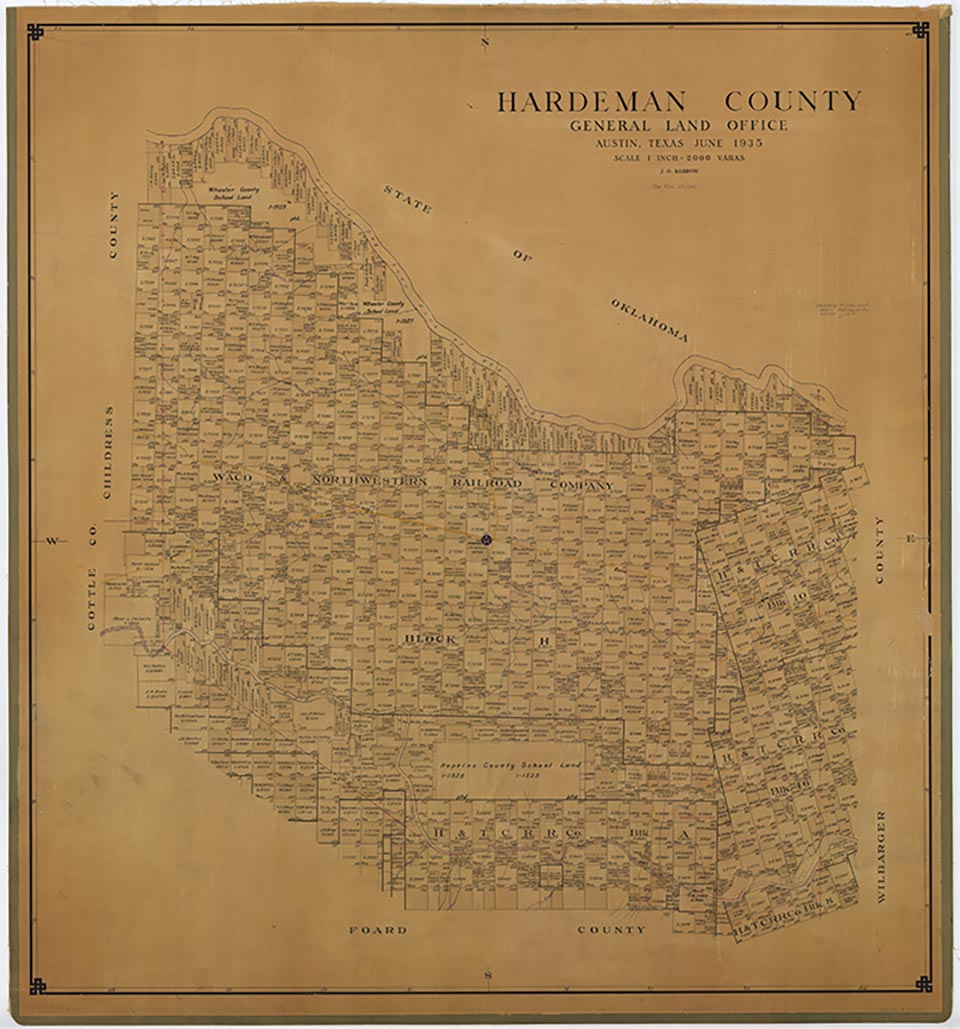
Acme, on U.S. Highway 287 four miles west of Quanah in central Hardeman County, developed around cement and plaster industries established there in the 1890s. In 1890 James Sickler, who operated a gypsum-processing plant in Kansas, discovered a large gypsum bed on Grosbeck Creek and reestablished his milling plant at the Texas site. He and his partners formed the Lone Star Cement Plaster Company, and later other Kansas manufacturers established another gypsum mill about a mile downstream from the first plant. The town's post office was established in 1898, and the Fort Worth and Denver City and Quanah, Acme, and Pacific railroads provided service. The Acme Tap Railroad Company was formed on January 7, 1899, when one of the gypsum plants refused to give its rival rail access. By the early 1900s the town had a hotel, a railway depot, a general store, and a school. Over the years a number of historic objects were discovered as a result of the open-pit gypsum excavations, including the remains of some prehistoric mastodons, which were said to have been sent to museums in St. Louis.
In 1945 the population of Acme was estimated at 400. The gypsum industry remained important to the town through the middle twentieth century, when Acme served as the home of the CertainTeed Products Corporation, once among the country's largest gypsum plants. The plant and mine closed during the 1960s, however, causing the community to decline. The population was estimated at fourteen in 1975. By the mid-1980s the old gypsum plant was owned and operated by the Georgia Pacific Corporation, which produced gypsum wallboard for the construction industry. Though little remained of the town except for scattered dwellings and the ruins of old buildings, Acme still reported a population of fourteen in 1990.
Bibliography:
T. Lindsay Baker, Ghost Towns of Texas (Norman: University of Oklahoma Press, 1986). Bill Neal, The Last Frontier: The Story of Hardeman County (Quanah, Texas: Quanah Tribune-Chief, 1966).
Time Periods:
Places:
The following, adapted from the Chicago Manual of Style, 15th edition, is the preferred citation for this entry.
Alice J. Rhoades, “Acme, TX,” Handbook of Texas Online, accessed March 09, 2026, https://www.tshaonline.org/handbook/entries/acme-tx.
Published by the Texas State Historical Association.
TID:
HNA05
All copyrighted materials included within the Handbook of Texas Online are in accordance with Title 17 U.S.C. Section 107 related to Copyright and “Fair Use” for Non-Profit educational institutions, which permits the Texas State Historical Association (TSHA), to utilize copyrighted materials to further scholarship, education, and inform the public. The TSHA makes every effort to conform to the principles of fair use and to comply with copyright law.
For more information go to: http://www.law.cornell.edu/uscode/17/107.shtml
If you wish to use copyrighted material from this site for purposes of your own that go beyond fair use, you must obtain permission from the copyright owner.
- 1952
- July 27, 2023