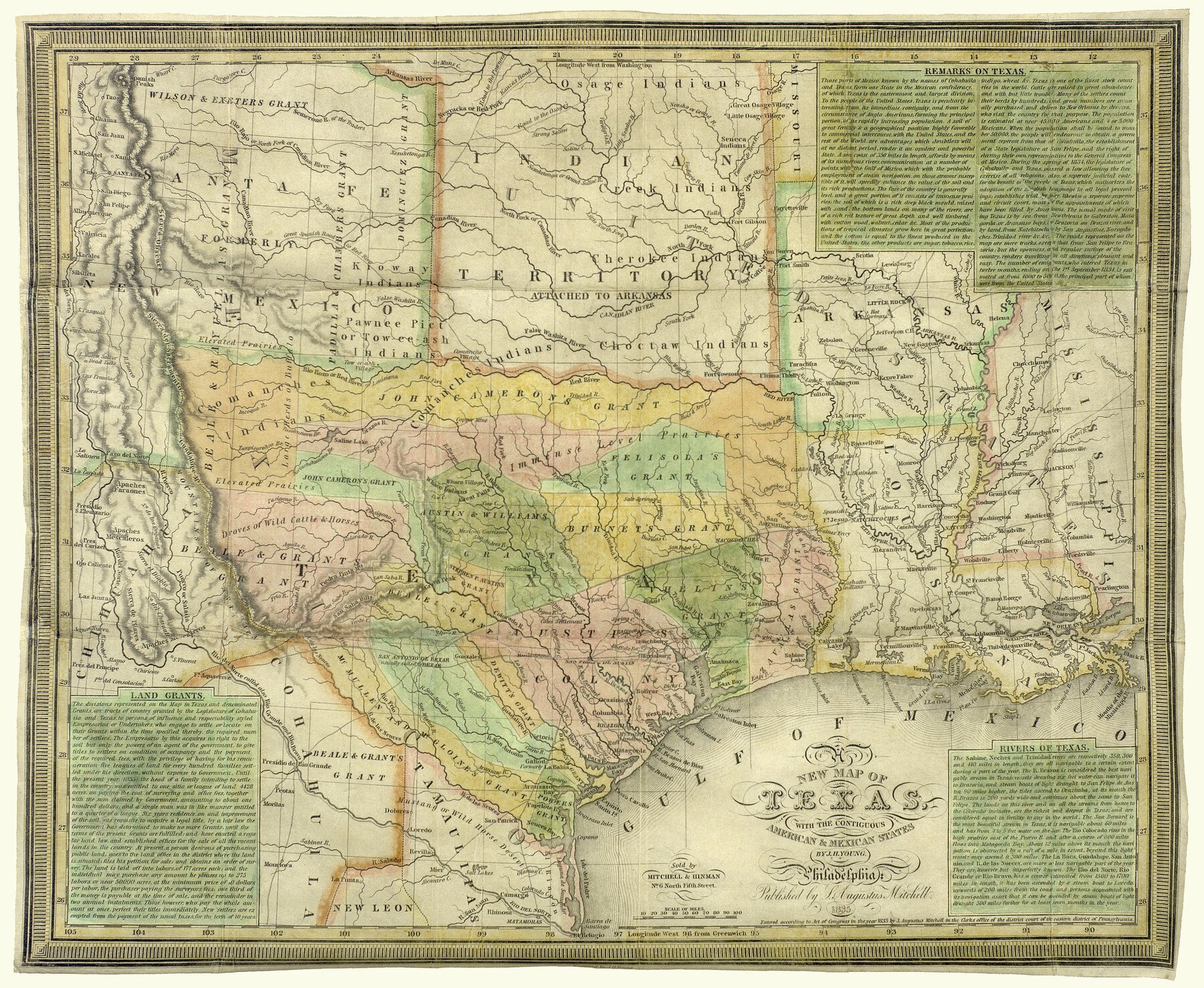
José Ignacio de Arizpe: Governor of Coahuila y Texas (1783–1844)
Published: September 11, 2024
Updated: September 11, 2024
José Ignacio (also spelled Ygnacio) de Arizpe was a landowner, merchant, politician, and governor of Coahuila y Texas. He was active during the late viceregal period and the early years of independent Mexico. He was born on December 31, 1783, in Saltillo, then part of the Intendancy of Nueva Vizcaya, but attached to the province of Coahuila, Mexico, in 1785. His parents were Francisco de Arizpe and Rosalía de Cárdenas.
Little is known about his early years. Arizpe married María Josefa Lobo Guerrero, from a prominent local family, on September 2, 1806, in Saltillo. After the passing of his wife, Arizpe married Liberata Ramos Valdés, the niece of Miguel Ramos Arizpe, on January 7, 1821, also in Saltillo. He fathered a large progeny through both marriages.
By 1808 José Ignacio de Arizpe was actively engaged in trading merchandise, agriculture, and raising cattle between Saltillo and San Fernando de Béxar. He owned the ranches El Molino and Miraflores, as well as the grazing land of Palma Gorda and the spinning mill at Labrador. Arizpe, along with his in-laws, sided with the loyalists during the Mexican insurgency. By 1811 he served on the municipal council as síndico procurador. By 1816 he had become the alcalde segundo and ascended to alcalde primero in 1819. In the run-up to independence, he served as an alternate to the Provincial Deputation of the Eastern Interior Provinces and after independence as alcalde primero in 1822.
The constituent congress elected to govern the new state of Coahuila y Texas and produce a state constitution, elected Arizpe vice governor on August 27, 1825. Following political disputes between a number of municipalities and the congress that led to the resignation of the governor, Rafael González, Arizpe assumed the office on May 6, 1826, and served until the first elections under the 1827 Constitution of Coahuila and Texas took place.
Arizpe's approach to governance was marked by a meticulous attention to administrative and legal frameworks, ensuring that the colonization efforts under his oversight were grounded in clear guidelines and procedures. For instance, his decision to appoint Gaspar Flores de Abrego as commissioner for Austin’s colony underscored Arizpe’s hands-on involvement in land distribution and settlement development, highlighting his commitment to ensuring a systematic and orderly approach to colonization. Similarly, in 1826 Arizpe approved the plan to establish the town of Gonzales, after reviewing DeWitt’s application from 1825.
On May 30, 1826, Arizpe submitted his resignation, but the Congress did not approve it in either October or December, following negative recommendations from the special “Justice Committee.” After his resignation was rejected for the second time, he was compelled to resume his duties. Arizpe returned to office to “take the reins of government” on January 22, 1827. During his unjustified absence, Víctor Blanco, then vice governor, served as the state’s highest authority.
Arizpe’s return to office was characterized by an acute understanding of the logistical challenges inherent in managing a vast and contested territory. His directives on issues such as surveying costs and methods reflect a pragmatic approach to resolving the logistical challenges associated with land distribution. By issuing guidance on the use of a “Registro” for documenting land titles, Arizpe sought to instill legal accuracy and procedural clarity in the management of land ownership—a crucial aspect of ensuring stability and legitimacy in the burgeoning settlements. Similarly, in June 15, 1827, he requested Political Chief of the Department of Texas José Antonio Saucedo to nominate a suitable commissioner for the De León’s colony.
Immigration regulation represented another facet of Arizpe’s governance. His response to the petition from inhabitants on the San Jacinto and Trinity rivers, seeking annexation to Austin’s colony, illustrated the delicate balance Arizpe sought to maintain between encouraging population growth and ensuring the security and orderly development of the territory. Similarly, he ordered the settlement of Anglos in the interior of the colonies, only granting permission to settle in the coast and border leagues to those who received authorization from the central government. This aspect of his governance highlights the broader challenges of managing demographic shifts and settlement patterns within Texas.
During Arizpe’s governorship the Constitution of Coahuila and Texas was proclaimed. In the session of March 12, 1827, he praised the Coahuiltejano constitution for its protection of Catholicism. He and members of the executive council lauded its provisions for free thinking and a free press but expressed regret that the state had not fully eradicated slavery—a subject of significant importance and complexity during the sessions due to the determined stance of Anglo-Texan slaveholders. Arizpe’s and others’ remarks encapsulated the underlying nature and tensions within the assembly, underscoring the challenges posed by the state’s diverse and expanding population.
After the elections of July 1827, José María Viesca replaced Arizpe as governor. Despite not continuing in the gubernatorial role, José Ignacio remained active in politics in his hometown of Saltillo and served as alcalde primero in 1830, 1832, and 1839. Arizpe held the position of governor of Coahuila once again between January 5, 1841, and January 5, 1842, governing during a period of continuous conflicts with Comanche raiders, even confronting them on the battlefield. In 1844 Arizpe was elected senator. While traveling to Mexico City to serve in this capacity, he passed away on February 11, 1844, in San Luis Potosí.
Bibliography:
Austin's Colony Records (AR.87.AU), Archives and Records Program, Texas General Land Office, Austin. Nettie Lee Benson, The Provincial Deputation in Mexico: Harbinger of Provincial Autonomy, Independence, and Federalism (Austin: University of Texas Press, 1992). Ildefonso Dávila del Bosque, Alcaldes de Saltillo: la autoridad local, desde Alberto del Canto a los actuales munícipes, 1577–1999 (Saltillo: Archivo Municipal de Saltillo, 1999). De León's Colony Records (AR.87.DL), Archives and Records Program, Texas General Land Office, Austin. DeWitt's Colony Records (AR.87.DW), Archives and Records Program, Texas General Land Office, Austin. Sánchez Navarro Collection, Benson Latin American Collection, LLILAS Benson Latin American Studies and Collections, University of Texas at Austin. Manuel González Oropeza and Jesús F. de la Teja, eds., Actas Del Congreso Constituyente de Coahuila y Texas de 1824 a 1827: Primera Constitución Bilingüe (Ciudad de México: Tribunal Electoral del Poder Judicial de la Federación, 2016). Vito Alessio Robles, Coahuila y Texas desde la consumación de la independencia hasta el tratado de Paz de Guadalupe Hidalgo, Vol. 1 (México: Talleres Gráficos de la Nación, 1945); Vol. 2 (México: Talleres Gráficos de la Nación, 1946). María Elena Santoscoy, Arturo Eduardo Villarreal, and Miguel Soto, eds., La independencia y el problema de Texas: dos eventos en Coahuila (Saltillo: Archivo Municipal de Saltillo, 1997).
Time Periods:
The following, adapted from the Chicago Manual of Style, 15th edition, is the preferred citation for this entry.
Ahmed Deidán de la Torre, “Arizpe, José Ignacio de,” Handbook of Texas Online, accessed March 09, 2026, https://www.tshaonline.org/handbook/entries/arizpe-jose-ignacio-de.
Published by the Texas State Historical Association.
TID:
FARJI
All copyrighted materials included within the Handbook of Texas Online are in accordance with Title 17 U.S.C. Section 107 related to Copyright and “Fair Use” for Non-Profit educational institutions, which permits the Texas State Historical Association (TSHA), to utilize copyrighted materials to further scholarship, education, and inform the public. The TSHA makes every effort to conform to the principles of fair use and to comply with copyright law.
For more information go to: http://www.law.cornell.edu/uscode/17/107.shtml
If you wish to use copyrighted material from this site for purposes of your own that go beyond fair use, you must obtain permission from the copyright owner.
- September 11, 2024
- September 11, 2024
This entry belongs to the following special projects: