Brooke Army Medical Center: A Premier Military Health Facility
By: Nolan A. Watson
Revised by: William V. Scott
Published: 1952
Updated: April 29, 2025
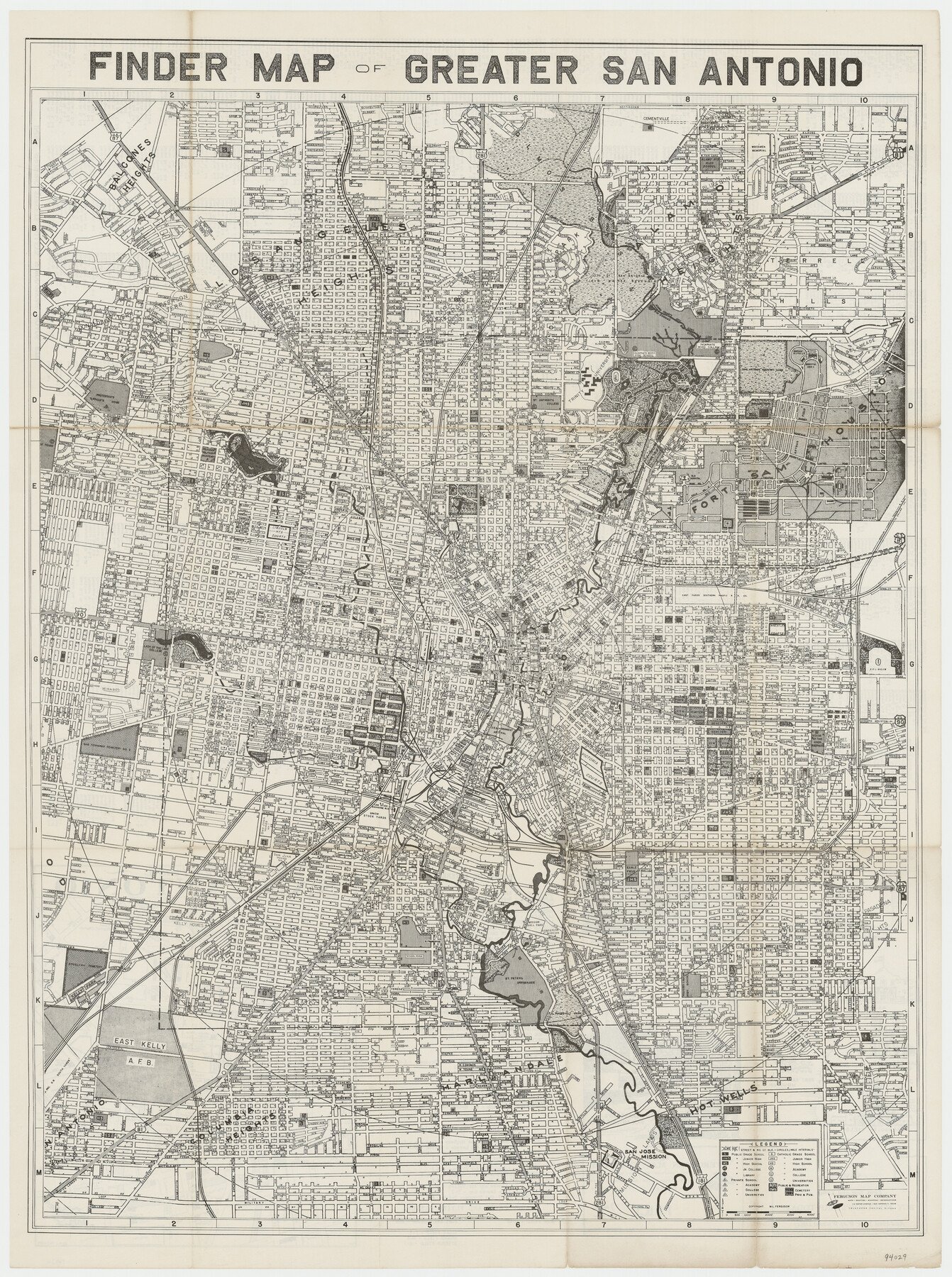
Brooke Army Medical Center (BAMC), at Joint Base San Antonio-Fort Sam Houston, is one of the United States Military Health System’s premier medical facilities employing approximately 8,500 active duty military personnel from each of the uniformed services, federal civilian employees, contract health care professionals, and volunteers providing both inpatient and outpatient services for more than 4,000 patients each day. Located in the heart of San Antonio, JBSA-Fort Sam Houston is the birthplace of military aviation and has evolved into the “Home of Military Medicine.”
BAMC provides care to military service members, their families, veterans, and civilian emergency patients as the largest and productive military health care organization within the U.S. Department of Defense. BAMC provides primary, secondary, and tertiary health care to its eligible population in a 425-bed facility, including forty beds reserved for the internationally-renowned U.S. Army Institute of Surgical Research Burn Center. The Burn Center has been jointly verified by the American Burn Association and the American College of Surgeons Committee on Trauma and provides emergency services for residents from twenty-two South Texas counties. BAMC treats approximately 750 burn patients annually. In addition to its main inpatient facility, BAMC includes six outpatient clinics: CPT Jennifer M. Moreno Primary Care Clinic; McWethy Troop Medical Clinic; Taylor Burk Clinic at Camp Bullis; the Schertz Medical Home; the Westover Hills Medical Home; and the Corpus Christi Occupational Health Clinic. The hospital campus includes the Center for the Intrepid, a four-story extremity injury rehabilitation center, surrounded by four Fisher Houses. BAMC also conducts significant postgraduate medical education, medical training, and medical research programs.
From 1845 when the first U. S. Army units arrived in San Antonio until 1886 when the first permanent hospital was constructed on Fort Sam Houston, Army medical officers operated out of temporary facilities and buildings appropriated for the Army’s use. In 1879 the first post hospital was built at Fort Sam Houston, and the small twelve-bed medical dispensary was in a single-story wooden board-and-batten building. The first permanent hospital was a brick twelve-bed facility to which wings were added in 1890 and 1900. The 1886 hospital was used until it was replaced in 1908 and in the 2010s served as Distinguished Visitors Quarters. The 1908 hospital was designated a station hospital, reflecting Fort Sam Houston’s growth to, at that time, the largest Army post in the country. Initially constructed with an eighty-four-bed capacity on the west side of the post, it was expanded in 1910 to 152 beds by the addition of two wings. By 1912 isolation and maternity wards were added to expand the station hospital. Col. Roger Brooke served as chief of the medical service from 1929 to 1933 and served as commanding officer of the station hospital.
In July 1936 the cornerstone was laid for the building of a new station hospital on the site of the old Camp Travis base hospital. By November 1938 the new $3 million, 418-bed facility was operational. After the onset of World War II, the hospital was given additional capability and redesignated as a general hospital. In 1941 the new station hospital prepared for casualties from American involvement on World War II battlefields by converting a 220-person enlisted barracks into additional hospital patient wards. This facility would later become BAMC headquarters. In 1942 the hospital was renamed Brooke General Hospital for recently deceased Brig. Gen. Roger Brooke, who died in 1940. Brooke, former station hospital commander, was also credited with initiating the first routine chest X-ray in military medicine. In 1942 a psychiatric ward was constructed in the old station hospital area on the hospital campus.
The hospital continued to expand during the war and reached a maximum bed capacity of 7,800 beds in 1945, when the facility converted the 15th Field Artillery Barracks to Annex IV which became a convalescent unit. In 1946 Fort Sam Houston became the “home of Army Medicine” with the relocation of the U.S. Army Medical Field Service School, U.S. Army Surgical Research Unit, and other Medical Department organizations to Fort Sam Houston. The decision to centralize the U. S. Army's medical research and training to one location resulted in the reorganization and renaming of Brooke General Hospital to Brooke Army Medical Center (BAMC). Over the ensuing years the complex continued to thrive and grow. The expansions to BAMC included the designation of Annex IV to Beach Pavilion and the psychiatric ward as the Chambers Pavilion, which both occurred in 1959.
In 1975 BAMC was added to the National Register of Historic Places as a “contributing property of the Fort Sam Houston Historic District.” By 1987, as the hospital approached its fiftieth anniversary, BAMC had expanded to occupy all or part of fifty-nine separate buildings on Fort Sam Houston. The time had come to construct a new hospital and in September, the official groundbreaking took place for the new construction. A new seven-story medical facility was dedicated on March 14, 1996, and “New BAMC” received its first patients in April. In 2001 Brooke Army Medical Center was added to the National Register of Historic Places on its own merits.
In the wake of the attacks on September 11, 2001, BAMC’s inpatient facility has cared for casualties returning from the battlefields of the global war on terror and has served as the sole verified Level I trauma center within the Department of Defense. The trauma center also serves San Antonio and the surrounding area and accounts for approximately 80,000 emergency department visits annually. Civilians without any military affiliation account for approximately 85 percent of BAMC’s trauma admissions. BAMC has played a critical role in the care for combat casualties that were wounded in Afghanistan or Iraq. Since 2007 the Center for the Intrepid on the BAMC main campus has provided long-term rehabilitation and recovery care for some of our nation’s most severely wounded warriors and has been responsible for advances in amputee care, prosthetics integration, and functional restoration for patients undergoing limb salvage.
In 2005 Base Realignment and Closure (BRAC) recommended the realignment of the inpatient services and related specialty care from Wilford Hall Medical Center to BAMC. Consequently, groundbreaking was held in late 2008 for major renovations and construction on the BAMC campus to include a 760,000-square-foot consolidated tower, 1,800,000-square-foot parking garage, and 22,400-square-foot central energy plant. In 2010 Fort Sam Houston Primary Care Clinic opened, and Camp Bullis Health Clinic was renamed the Taylor Burk Clinic in memory of SPC Taylor J. Burk, an Army medic from Amarillo. With the consolidation of these facilities in Joint Base San Antonio in 2011, the installation was renamed the San Antonio Military Medical Center (SAMMC) but is still commonly referred to as Brooke,
Since 2011 BAMC has been a mission partner with the 59th Medical Wing forming the San Antonio Military Health System, which began operations on September 15, 2011, and is “responsible for providing management and oversight of business, clinical, and educational functions of all Military Health System (MHS) medical treatment facilities (MTFs) located in the San Antonio metropolitan area.” That same year Schertz Medical Home opened. In 2015 the Fort Sam Houston Primary Care Clinic was renamed CPT Jennifer M. Moreno Primary Care Clinic, and the Westover Medical Home opened. In 2017 the Undersea Hyperbaric Medicine Clinic opened on the BAMC Campus. Brooke Army Medical Center received the Joint Commission's Gold Seal of Approval in 2018.
In 2021 BAMC expanded its ability to care for trauma patients through transfers from other regional hospitals to help ease the COVID-19 burden on the local health care system in the San Antonio area. On July 29, 2021, U.S. Army Brig. Gen. Clinton Murray, an infectious disease physician, assumed command of Brooke Army Medical Center. A Lubbock native and graduate of Texas Tech University, Murray had served as chief of the Infectious Disease Service at BAMC from 2011 to 2015.
Bibliography:
"BAMC Facts," U.S. Army Medical Department Brooke Army Medical Center, March 23, 2017 (https://www.bamc.amedd.army.mil/bamc-facts.asp), accessed November 22, 2017. Brooke Army Medical Center: About Us (https://bamc.tricare.mil/About-Us), accessed April 22, 2025. Brooke Army Medical Center, Fort Sam Houston, TX, History (https://www.brookearmymedicalcenterhousing.com/history), accessed April 22, 2025. Lubbock Avalanche-Journal, August 8, 2021. John M. Manguso, Hospitals at Fort Sam Houston (Fort Sam Houston: Fort Sam Houston Museum, 2006). Lori Newman, “‘'New BAMC’ marks 20th anniversary,” Brooke Army Medical Center Public Affairs, April 19, 2016, U.S. Army (https://www.army.mil/article/166349/new_bamc_marks_20th_anniversary), accessed April 23, 2025. “San Antonio Military Health System,” Health.mil. (https://health.mil/Military-Health-Topics/Access-Cost-Quality-and-Safety/Access-to-Healthcare/Multi-Service-Markets/San-Antonio-Military-Health-System), accessed November 22, 2017. Elaine Sanchez, “BAMC takes on additional trauma patients,” January 7, 2021, U.S. Army (https://www.army.mil/article/242231/bamc_takes_on_additional_trauma_patients), accessed April 23, 2025.
Time Periods:
Places:
The following, adapted from the Chicago Manual of Style, 15th edition, is the preferred citation for this entry.
Nolan A. Watson Revised by William V. Scott, “Brooke Army Medical Center,” Handbook of Texas Online, accessed March 09, 2026, https://www.tshaonline.org/handbook/entries/brooke-army-medical-center.
Published by the Texas State Historical Association.
TID:
QNB01
All copyrighted materials included within the Handbook of Texas Online are in accordance with Title 17 U.S.C. Section 107 related to Copyright and “Fair Use” for Non-Profit educational institutions, which permits the Texas State Historical Association (TSHA), to utilize copyrighted materials to further scholarship, education, and inform the public. The TSHA makes every effort to conform to the principles of fair use and to comply with copyright law.
For more information go to: http://www.law.cornell.edu/uscode/17/107.shtml
If you wish to use copyrighted material from this site for purposes of your own that go beyond fair use, you must obtain permission from the copyright owner.
- 1952
- April 29, 2025
This entry belongs to the following special projects: