The History of Copano: Texas' Abandoned Port Town
Revised by: Jesús "Frank" de la Teja
Published: 1952
Updated: November 6, 2024
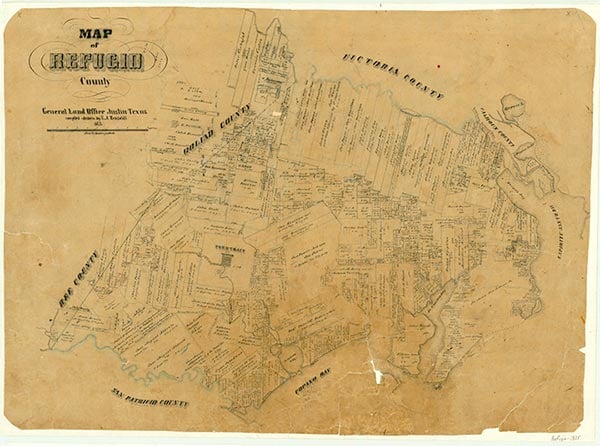
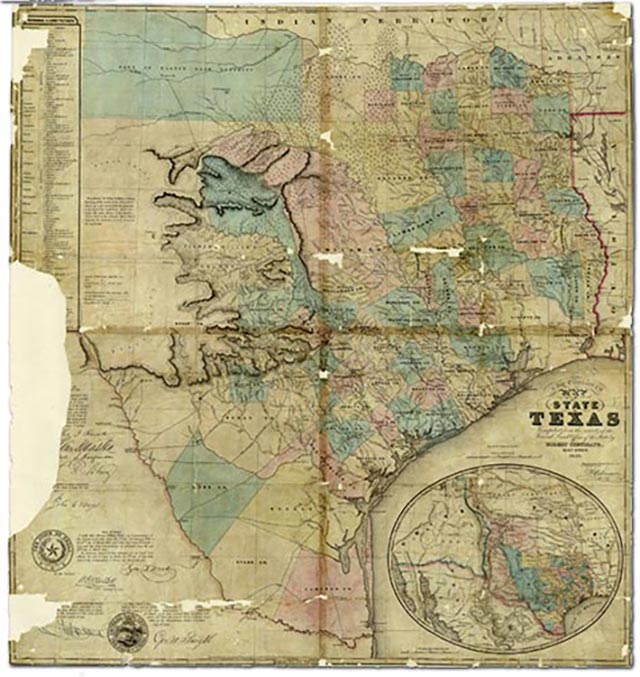
The long-abandoned port, and later town, of Copano was at what is now called Copano Point on the northwestern shore of Copano Bay, thirty miles north of Corpus Christi in southeastern Refugio County. The townsite is practically inaccessible by land, but can be reached by boat from Bayside, the nearest town, five miles to the south. Copano was named for the Copane Indians who frequented the area and during the Spanish and Mexican eras was known as El Cópano.
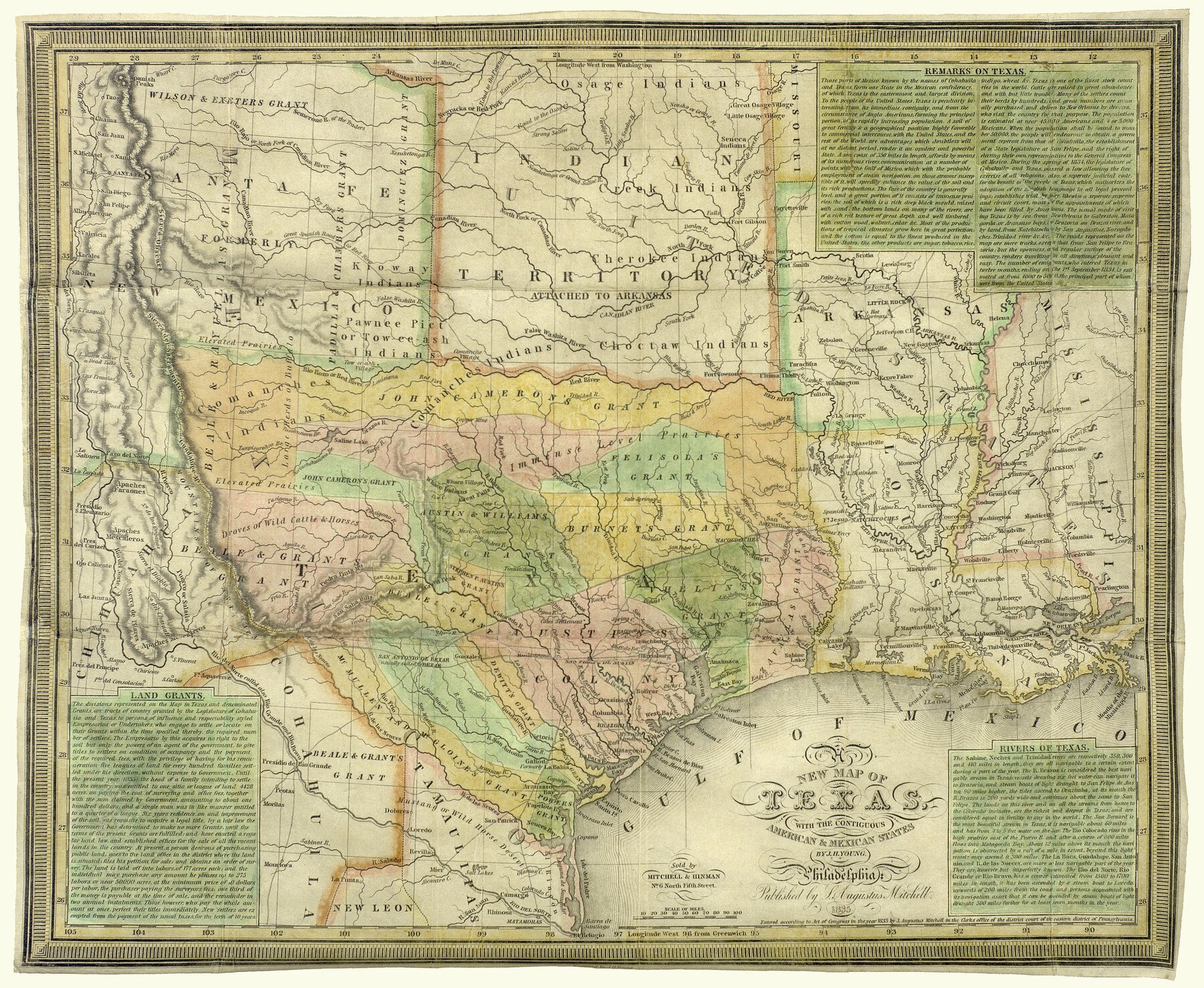
The Spanish word puerto may have been the cause of the mistaken belief that Spaniards established a port during the colonial period, as it was the term commonly used in documents regarding explorations of the coast both from land and sea. However, in Spanish as in English the word also means bay, harbor, or inlet; in other words, a natural feature rather than a developed port. Although it may have been the site of incidental landings and shipwrecks at an early date, there is no evidence of Spanish activity to open a port there, or even farther north at Matagorda Bay until the nineteenth century. The explorations of José de Evia in 1785–86 do not mention a visit to Copano Bay, but do address the issue of Karankawa control of the area. This part of the Texas coast remained largely inaccessible to the Spanish in the 1790s, even after the founding of Mission Refugio. The 1807 map of the Gulf of Mexico coast made for Sub-Inspector Félix María Calleja indicates a post at the approximate site of the present-day town of Matagorda and does not identify Copano Bay.
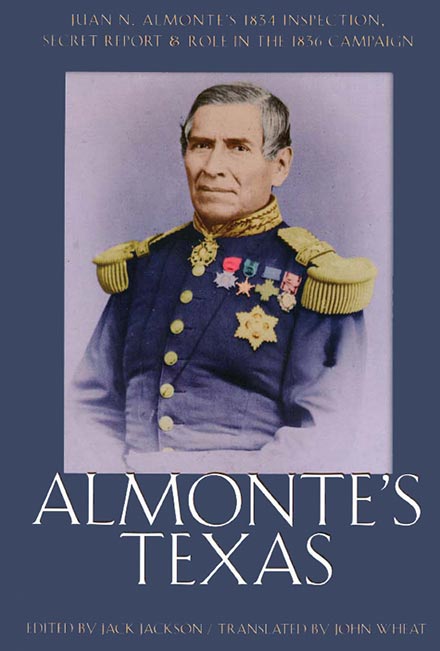
Copano begins to appear in the Bexar Archives in the mid-1820s, with reports of ships anchoring at the mouth of Copano Creek, although as late as 1833 the increasingly busy port lacked its own military detachment, and in July 1835 the customs administrator at Matagorda was still attending to business at Copano. In 1834 Gen. Juan N. Almonte, on an inspection tour for Mexican president Antonio López de Santa Anna, reported Copano to have the deepest port in Texas.
Between 1828 and 1835 groups of colonists passed through the port on their journeys from Europe to settlement in Texas. Groups of Irish arrived during 1833 and 1834. One large group of Irish colonists was struck by cholera during the voyage from New York, and many arrived in Texas only to be buried on the Copano beach. The port of Copano became strategically important to both the Mexican and Texas armies during the Texas Revolution. On September 20, 1835, Mexican general Martín Perfecto de Cos and his army landed at Copano on their way to Goliad and Bexar. The next month Gen. Sam Houston issued orders that Copano be fortified. The Texans held the site and used it as a port of entry for supplies and provisions until March 1836, when the port fell to the Mexicans under Gen. José de Urrea. When Maj. William P. Miller and his Nashville Company of volunteers anchored at Copano in late March 1836, they were captured by the Mexicans. The port was used by the Mexicans to receive reinforcements and to evacuate their wounded and prisoners. After they withdrew from the area in May 1836, the Texans once again gained control of the port. The famous "Horse Marines" incident occurred on the beach at Copano on June 3 and June 17, 1836, when Maj. Isaac W. Burton's Mounted Rangers captured Mexican vessels, men, and supplies.
Settlement of Copano began around 1840 under the direction of James Power. Associated with Power in the townsite project were Robert J. Walker, Duncan S. Walker, and Robert H. Hughes. The first home built at Copano was constructed by Joseph E. Plummer, Jr., around 1840. The Plummer cemetery is a mile north of the Copano townsite. By 1852 a dozen homes had been built in Copano, all of shell concrete made from materials found on the beach. A small school and two stores were constructed in the town. One store housed the post office, which operated between 1851 and 1867. Three wharves stretched into the town's harbor, described by a visitor as being "by far the safest harbor on the entire [Texas] coast." Cotton, hides, and tallow were principal products shipped through the port. Copano thrived during the Civil War. Most Southern ports were blockaded, but because Copano was located on an inlet, ships could be loaded there unobserved by Union forces and then slip out to sea. However, in response to blockade running, a Union gunboat fleet anchored at Copano in 1864, and the town's inhabitants fled and remained away until the Yankees left a few days later. Various efforts to connect the town by railway to Goliad and San Antonio failed, and the inhabitants traveled to Refugio and the interior on an old military road that went north fourteen miles to the Refugio Mission, and later over a longer, more traveled highway that paralleled the bluff above Mission Bay, crossed Melon Creek, and then turned westward to Refugio. Throughout Copano's existence, an adequate fresh-water supply was difficult to maintain. The water problem, combined with the absence of a railroad and efficient interior transportation route, led to the demise of the town. Most residents moved to nearby Refugio, and by the 1880s Copano was abandoned.
Bibliography:
Bexar Archives, Dolph Briscoe Center for American History, University of Texas at Austin. Hobart Huson, El Copano: Ancient Port of Bexar and La Bahia (Refugio, Texas: Refugio Timely Remarks, 1935). Hobart Huson, Refugio: A Comprehensive History of Refugio County from Aboriginal Times to 1953 (2 vols., Woodsboro, Texas: Rooke Foundation, 1953, 1955). Robert S. Weddle, Changing Tides: Twilight and Dawn in the Spanish Sea, 1763–1803 (College Station: Texas A&M University Press, 1995).
Time Periods:
The following, adapted from the Chicago Manual of Style, 15th edition, is the preferred citation for this entry.
June Melby Benowitz Revised by Jesús "Frank" de la Teja, “Copano, TX,” Handbook of Texas Online, accessed March 09, 2026, https://www.tshaonline.org/handbook/entries/copano-tx.
Published by the Texas State Historical Association.
TID:
HVC74
- 1952
- November 6, 2024
This entry belongs to the following special projects: