Samuel George Hardaway: Texas Revolution Veteran and Merchant (ca. 1820–1873)
By: James E. Brasher
Published: September 18, 2024
Updated: September 18, 2024
Samuel George Hardaway, participant in the Texas Revolution, son of James Hicks Hardaway and Elizabeth M. G. (Raines) Hardaway, was born near Macon, Georgia, probably in February 1820, based on census information (some sources, including his tombstone, give 1822 as the year of birth). When he was about fifteen years old, he joined William A. Ward and a group of area volunteers to join the Texas cause against Mexico. The Georgia Battalion left for New Orleans in November 1835 and upon arrival boarded the schooner Pennsylvania and landed at Velasco, then sailed to “Copono” (presumably Copano) and marched inland to Goliad. The battalion was mustered into the Revolutionary Army just before Christmas 1835. Muster rolls recorded Hardaway as part of Capt. Uriah Bullock’s company (of Macon volunteers) of the Georgia Battalion. Soon afterward, the group moved to Mission La Bahٌía in Goliad which was under the command of fellow Georgian James W. Fannin, Jr. Shortly after arriving there, Hardaway turned sixteen.
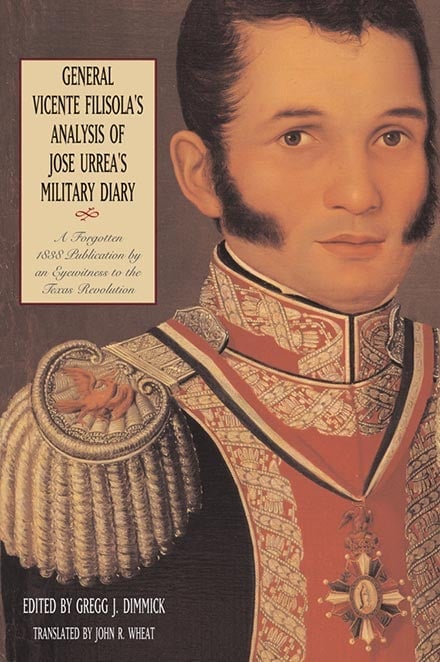
On March 13, 1836, Fannin dispatched Colonel Ward and the Georgia Battalion to Refugio to assist Amon B. King who was under attack by militia sympathetic to the Mexican government. Ward was ordered to withdraw with King to Goliad. The day after Ward’s arrival, they were attacked by Mexican forces under command of Gen. José de Urrea in the battle of Refugio. Ward’s command eventually surrendered while attempting to escape to Dimmit’s Landing. Hardaway, however, was inadvertently left behind in the swamps of the Guadalupe River near Victoria more than 100 miles behind enemy lines.
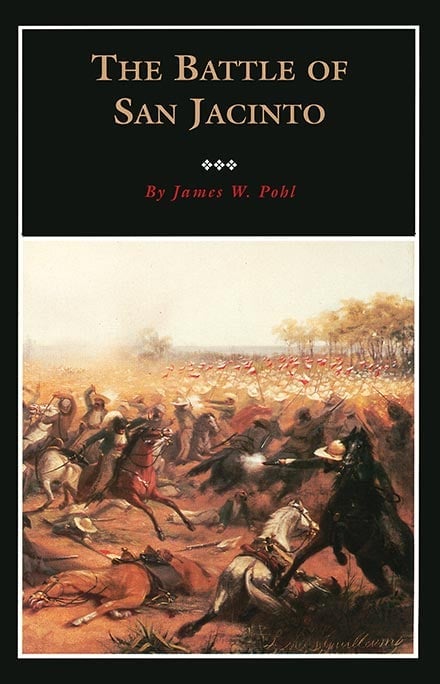
Hardaway avoided capture and during the course of several days followed the Guadalupe River north far enough to escape the reach of Urrea’s forces. As he was crossing the Guadalupe, he came upon three others who had been left by Ward: M. K. Moses, Joseph Andrews, and James P. Trezevant (or Tresvant). A few days later, the group reached the Colorado River, probably very near Beeson’s Ford where only a day earlier Gen. Joaquín Ramírez y Sesma was encamped. After the group crossed the river on a bale of cotton, Hardaway and Moses, scouted to the south and watched the Mexican army fording the river at the Atascosito Crossing. On April 2, 1836, Texian scouts found the group and helped them to Sam Houston’s army which was encamped on the Brazos River. Hardaway was assigned to Moseley Baker’s company and subsequently fought at the battle of San Jacinto.
With the execution of most of Ward’s command at Goliad (see GOLIAD MASSACRE), Hardaway was one of the very few survivors who provided a first-hand account of the battle of Refugio. He also wrote an account of the battle of San Jacinto.
On April 30, Hardaway left the Texian army. Because he arrived before the signing of the Texas Declaration of Independence and had not received a land grant from Mexico, he was awarded a headright of land of one-third of a league (1,476.1 acres) within Archer, Young, and Goliad counties. Throughout the years, he sold this property in pieces. For his service in the Texian army from December 21, 1835, to April 30, 1836, Hardaway received a bounty of 320 acres of land in Goliad County which he sold. Having fought at the battle of San Jacinto, he was eligible for a donation grant, likely for 640 acres, but it was never pursued, and Hardaway never returned to Texas.
On his return to Georgia, Hardaway had the unfortunate luck to run straight into the Second Creek War. While traveling across hostile territory, his group was attacked by the Creek Indians. Though most of his fellow travelers did not survive, Hardaway escaped the attack and on May 20, 1836, made his way back to Tuskegee, Alabama, and eventually to Georgia.
On November 15, 1855, Georgia Governor Herschel V. Johnson sent a letter to Governor Elisha M. Pease of Texas to make a claim for arms and equipment captured by the Mexicans during the Texas Revolution. Accompanying the letter was an affidavit from Samuel Hardaway. As one of the few survivors from the Georgia Battalion, his testimony carried weight. Texas approved a payment of $3,000 which was to be used to construct a monument to the Georgia Battalion in or near Goliad.
Hardaway settled in Montgomery, Alabama, where he became a successful merchant. He married Mary Logan Hunter on April 22, 1844, and had three children. Not long after her death in 1849, Hardaway married Sarah (Sallie) Pickett on October 29, 1850. They had nine children. The 1850 census recorded Hardaway as a cotton broker in Montgomery. According to the 1860 slave schedules, he had twelve enslaved people. In May 1861 he enlisted in the Confederate Army as a captain in the Sixth Alabama Infantry. After the war he became an adjutant general in the state militia. Samuel Hardaway died on January 18, 1873. He was buried in Oakwood Cemetery in Montgomery. After his death, his wife Sallie was granted a pension for her husband’s service in the Texian army decades earlier.
Bibliography:
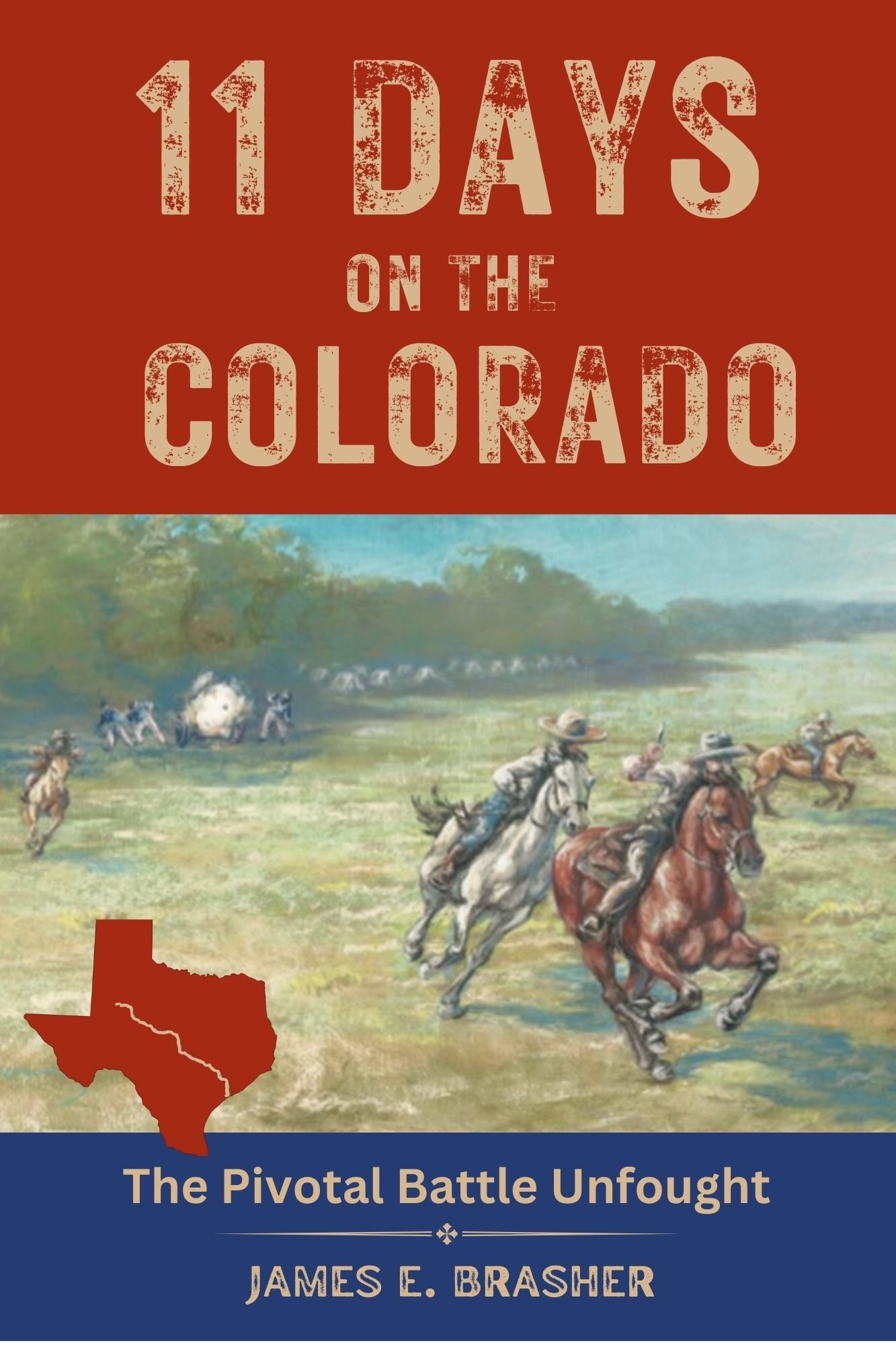
James E. Brasher, 11 Days on the Colorado: The Pivotal Battle Unfought (Austin: Texas State Historical Association, 2024). Claude Elliott, “Georgia and the Texas Revolution,” Georgia Historical Quarterly 28 (December 1944). Henry Stuart Foote, Texas and the Texans; or, Advance of the Anglo-Americans to the South-West (2 vols., Philadelphia: Cowperthwait, 1841; rpt., Austin: Steck, 1935). Georgia Messenger (Macon), June 9, 1836. Samuel G. Hardaway, April 30, 1836, Republic Claims, Audited Claim Unnumbered 01 (TSLA online: Reel Number 41, Image Numbers 16-19); June 12, 1874, Republic Claims, Pension Claim Number N/A (TSLA online: Reel Number 219, Image Number 178-193). Jewel Davis Scarborough, “The Georgia Battalion in the Texas Revolution: A Critical Study,” Southwestern Historical Quarterly 63 (April 1960).
The following, adapted from the Chicago Manual of Style, 15th edition, is the preferred citation for this entry.
James E. Brasher, “Hardaway, Samuel George,” Handbook of Texas Online, accessed March 09, 2026, https://www.tshaonline.org/handbook/entries/hardaway-samuel-george.
Published by the Texas State Historical Association.
TID:
FHARD
All copyrighted materials included within the Handbook of Texas Online are in accordance with Title 17 U.S.C. Section 107 related to Copyright and “Fair Use” for Non-Profit educational institutions, which permits the Texas State Historical Association (TSHA), to utilize copyrighted materials to further scholarship, education, and inform the public. The TSHA makes every effort to conform to the principles of fair use and to comply with copyright law.
For more information go to: http://www.law.cornell.edu/uscode/17/107.shtml
If you wish to use copyrighted material from this site for purposes of your own that go beyond fair use, you must obtain permission from the copyright owner.
- September 18, 2024
- September 18, 2024