The Mysterious Disappearance of John Honeycutt and His Expedition
By: Marc Coker
Published: June 26, 2024
Updated: July 1, 2024
A group of Civil War deserters from Hunt County that were led by John Honeycutt vanished in 1865 while they attempted to flee the Confederacy on a failed expedition to Mexico. A small band of relatives including Honeycutt’s wife and slaves followed the main party of men and was informed at Williamson County that the men had been killed. According to most accounts, the men were suspected to have been killed by either American Indians or active Confederate troops, state home guards, or sympathetic Southern-leaning vigilantes.
While accounts vary, the party that disappeared was most likely between twenty to twenty-five people. The average age was about twenty-three at the start of the war. Most were not married and did not own property, and many still lived on their families’ farms in southern Hunt County on land that was originally within the boundary of the Mercer Colony. Most were born in the Midwest and Upper South in states such as Kentucky, Indiana, Missouri, and Arkansas. A contingent of the group belonged to Company H of Leonidas M. Martin’s Fifth Texas Partisan Rangers and served in the Indian Territory (modern Oklahoma) between the autumn of 1862 and July 1863. This unit was tasked with disrupting Union supply lines in Northeast Indian Territory and later worked as a police force to enforce conscription and locate deserters in Texas.
John Honeycutt, a native of Union Parish in north central Louisiana, was born about 1824 (a transcription of notes from the Garrison–Honeycutt Family Bible lists his date of birth as July 2, 1824). He married Sarah Ann Warren in Louisiana in 1852 and came to Texas in the early 1850s. According to family history he was in the business of leading families to Texas from Louisiana and other southern states. Honeycutt lived throughout the 1850s and until the start of the Civil War between Henderson and Anderson counties in East Texas. The 1860 census recorded him as a farmer living in Anderson County with his wife and four children at that time. In July 1861 he appeared on a muster roll as member of G. B. Pate’s company of reserves from Henderson County. By 1863 Honeycutt was established in Hunt County where his late father had owned property. In October of that year he enlisted in C. G. Titsworth’s company—an independent frontier militia unit from Hunt County. By May 1864 through the end of the war, he was listed as a member of James G. Bourland’s Border Regiment, Texas Cavalry. There he appeared in the records for companies H and K which were assigned to defend the frontier of Northwest Texas around Shackleford, Montague, and Wise counties. However, Honeycutt was seldom if ever active as he was authorized to repair “reapers” and “threshers” in Hunt County according to war records.
Questions about the fate of the Honeycutt expedition arose again in 1891 when the Corpus Christi Weekly Caller published several articles regarding the discovery of seventy-five skeletons excavated on the banks of Oso Lagoon, approximately seven miles south of Corpus Christi. The May 2, 1891, edition of the Weekly Caller included commentary from a news story in Hunt County’s Greenville Banner that stated that “Experts” believed that the remains were of the “Hunt county deserters,” which originally consisted of a party of twenty-one men but that others joined them along the journey. “Their burial place,” the Banner continued, “would indicate that they were pursued and hemmed in by water, as there is no conceivable reason why they should reach that point unless fleeing to avoid capture.” The report conceded, however, that there was no way to positively verify the identities of the remains or the story of their demise. The remains discovered at Oso Lagoon in 1891 are undoubtedly part of a later find in the early 1930s and determined to be those of an ancient burial ground for archaic peoples. The site is known as Cayo del Oso.
In an interview about 1916, York Honeycutt, a former slave of John Honeycutt, recalled accompanying Honeycutt’s wife Sarah and others on their journey to follow the expedition, that he stated was comprised of about eighty men, but when they reached Williamson County, they learned that the men had been killed. A list of names included with York’s interview are: Vince Payne, Joe Roby, Leonard Garrison, Chris Arnold, Jake Houk, John Honeycutt, and others.
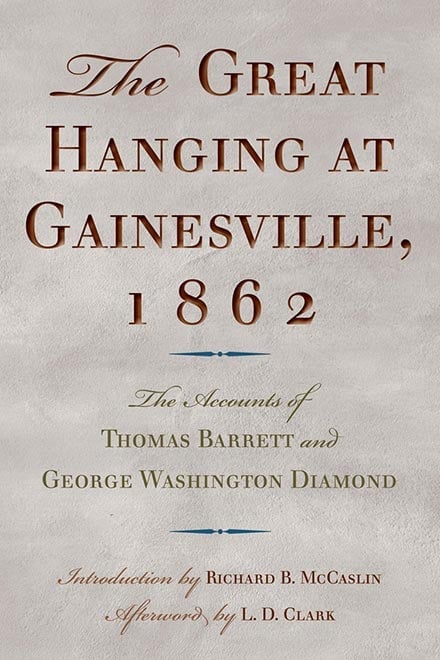
The John Honeycutt expedition was an example of Civil War dissent in Texas and is comparable to both the battle of the Nueces and the Great Hanging at Gainesville. In all three cases a relatively large number of men who were unwilling to fight or continue to fight for the Confederacy perished. Like the Hill Country Germans, the Honeycutt men had their sights on the international boundary of Mexico. And like the men who were hanged in Gainesville, the Honeycutt men were mostly of modest means. However, and uniquely unlike the first two tragedies, the surviving family members of the Honeycutt men had the additional burden of not knowing what became of their loved ones.
Bibliography:
L. L. Bowman Papers, Velma K. Waters Library Special Collections, Texas A&M University-Commerce. Compiled Service Records of Confederate Soldiers Who Served in Organizations from the State of Texas, National Archives and Records Service, Washington. Corpus Christi Weekly Caller, April 11, 1891; May 2, 1891. J. J. Faulk, History of Henderson County (Athens, Texas: Athens Review Printing, 1929). Greenville Banner, November 11, 1908. W. Walworth Harrison, History of Greenville and Hunt County, Texas (Waco: Texian Press, 1976). Frances Terry Ingmire, Archives and Pioneers of Hunt County, Texas Volume 1 (Creve Coeur, Missouri: Frances T. Ingmire, 1975). Dr. Peter N. Moore (Professor of History, Texas A&M University--Corpus Christi) to Marc Coker, Email communication September 22, 2022. David Pickering and Judy Falls, Brush Men & Vigilantes: Civil War Dissent in Texas (College Station: Texas A&M University Press, 2000). Patricia Atkins Rochette, Bourland in North Texas and Indian Territory During the Civil War: Fort Cobb, Fort Arbuckle & The Wichita Mountains (Duncan, Oklahoma: BourlandCivilWar.com, 2004). James M. Smallwood, Barry A. Crouch, and Larry Peacock, Murder and Mayhem: The War of Reconstruction in Texas (College Station: Texas A&M University Press, 2003). Vertical files, (Honeycutt Allied Families), Northeast Texas History and Genealogy Center, W. Walworth Harrison Public Library, Greenville, Texas.
Categories:
Time Periods:
Places:
The following, adapted from the Chicago Manual of Style, 15th edition, is the preferred citation for this entry.
Marc Coker, “Honeycutt Expedition,” Handbook of Texas Online, accessed March 09, 2026, https://www.tshaonline.org/handbook/entries/honeycutt-expedition.
Published by the Texas State Historical Association.
TID:
UPHON
All copyrighted materials included within the Handbook of Texas Online are in accordance with Title 17 U.S.C. Section 107 related to Copyright and “Fair Use” for Non-Profit educational institutions, which permits the Texas State Historical Association (TSHA), to utilize copyrighted materials to further scholarship, education, and inform the public. The TSHA makes every effort to conform to the principles of fair use and to comply with copyright law.
For more information go to: http://www.law.cornell.edu/uscode/17/107.shtml
If you wish to use copyrighted material from this site for purposes of your own that go beyond fair use, you must obtain permission from the copyright owner.
- June 26, 2024
- July 1, 2024
This entry belongs to the following special projects: