Tobe Hooper: Horror Filmmaker and Director of The Texas Chain Saw Massacre (1943–2017)
By: Frank Jackson
Published: January 30, 2026
Updated: February 2, 2026
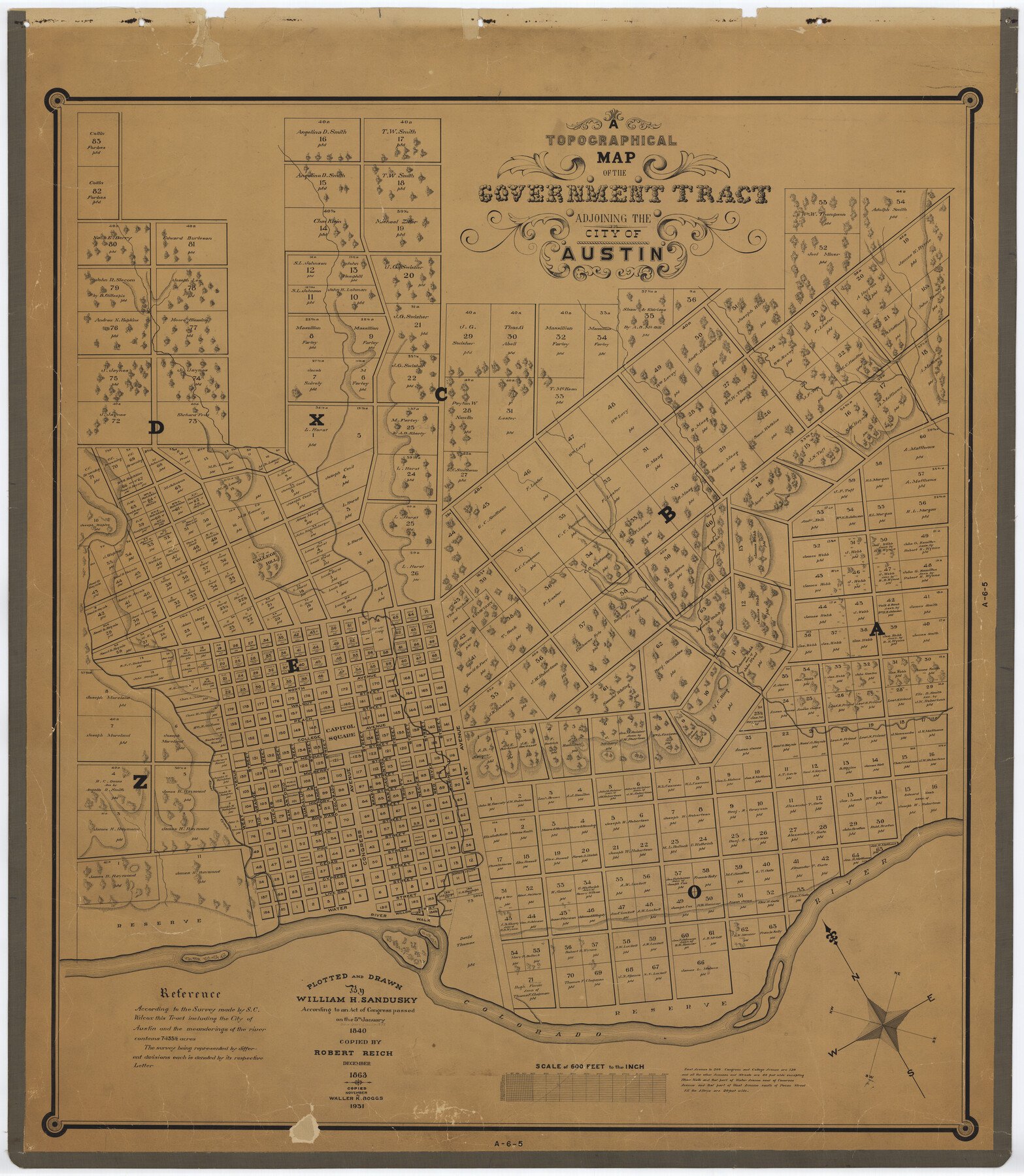
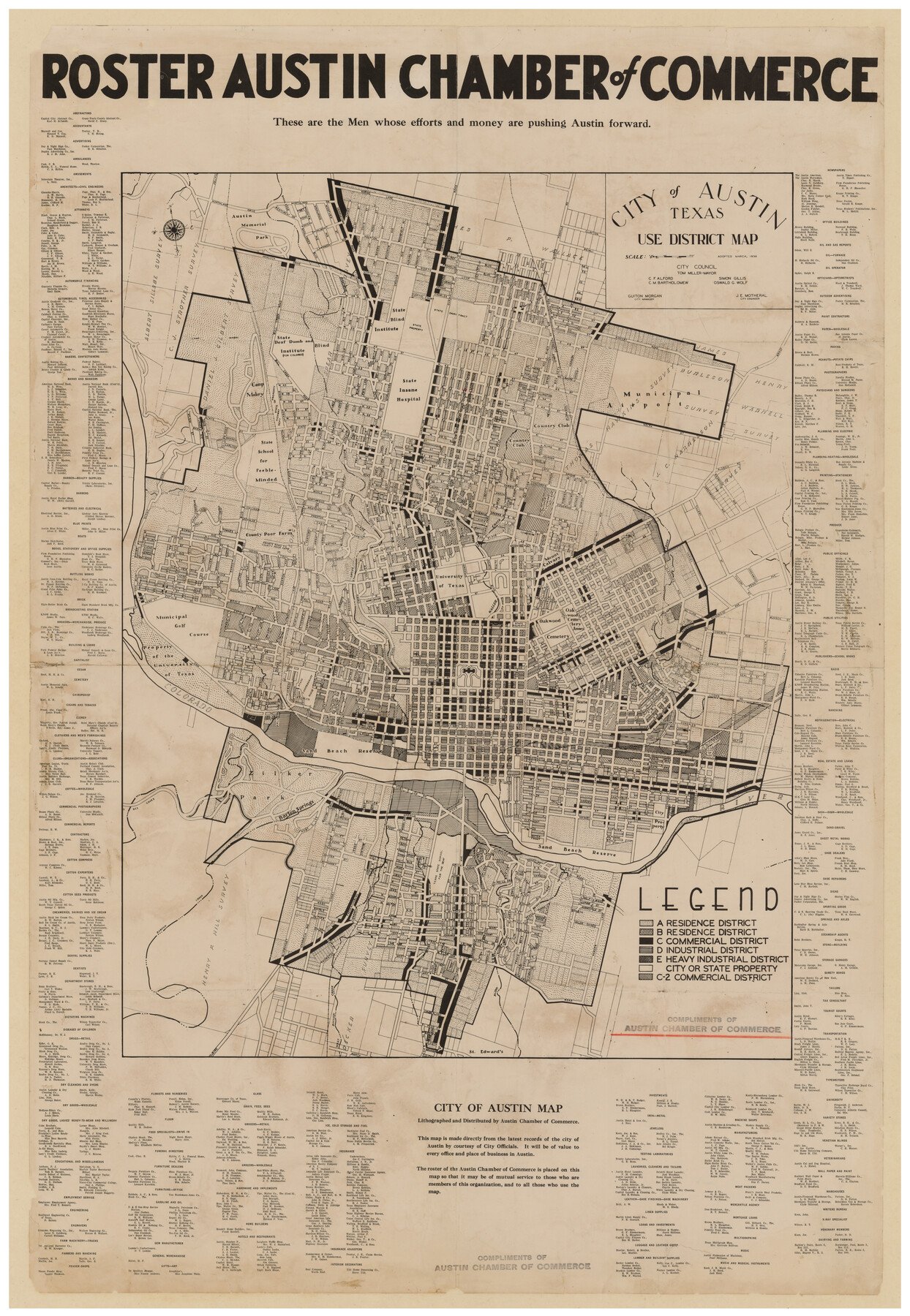
Tobe Hooper, horror filmmaker, was born in Austin, Texas, on January 25, 1943, to Lois Belle (Crosby) Hooper and Norman William Ray Hooper, who managed a hotel on Congress Avenue in downtown Austin. Four movie theaters—the Queen, the Capitol, the State, and the Paramount—were located near the hotel, which was also the family’s home. Hooper’s father also owned a movie theater in San Angelo. His boyhood was largely defined by moviegoing. According to Hooper, his mother had gone into labor with him while she was watching a movie at the State Theatre. At a young age he began making amateur movies on his family’s 8mm film camera. Hooper’s parents separated when he was young. As a teenager he moved to Grand Prairie to live with his father after the latter became terminally ill—he died in 1961.
Education and Early Work
Hooper attended Grand Prairie High School. In addition, he studied acting under Baruch Lumet at the Dallas Institute of Performing Arts. Hooper enrolled at the University of Texas at Austin prior to the formation of the university’s film school. At the same time, he gained hands-on experience directing commercials, short subjects, and industrial films. Hooper was present on the campus on August 1, 1966, when Charles Whitman shot dozens of people from the observation deck of the University of Texas Tower. He witnessed the fatal shooting of police officer Billy Paul Speed (the only police fatality during the University of Texas Tower shooting). Hooper directed Peter Paul and Mary: The Song Is Love, a cinéma vérité-style documentary shown on PBS affiliates in 1971. His first feature-length narrative film was Eggshells, a 1971 allegory on hippies. The movie was a good fit for film festivals (it won an award at the 1971 Atlanta International Film Festival) and campus screenings, but not one likely to be of interest to the general public. The film failed to find a distributor.
The Texas Chain Saw Massacre (1974)
Hoping to reach a wider audience, Hooper opted to film a low-budget exploitation movie. He was influenced in this decision by The Night of the Living Dead (1968), which demonstrated that horror films could become nationwide successes on very low budgets. Like most exploitation films, Hooper’s film, written with Eggshells co-writer Kim Henkel, involved a handful of unknown actors, non-union crews, and a minimum of locations, but the result was one of the most influential horror films of all time. The Texas Chain Saw Massacre, released in 1974 with a sordid title designed for drive-in movie marquees, became not just a pop culture phenomenon but the object of study—and often veneration—by film historians and critics.
The film, shot on 16mm and blown up to 35mm with a $60,000 production budget, was primarily filmed at an old farmhouse in rural Williamson County (adjacent to Travis County). The production was grueling—as the film was shot during a Texas summer and the set decorations included real animal parts from a local slaughterhouse—nausea among the cast and crew was common. The film’s most iconic character, the human-face-wearing Leatherface, was inspired by a story told to Hooper in his youth by a family doctor, who claimed that he had made a Halloween mask from the skin of a cadaver.
Like George Romero (director of Night of the Living Dead), Hooper had been a fan of the horror and science fiction comics published in the 1950s by Entertaining Comics (popularly known as EC). The lurid stories found in such titles as Tales from the Crypt, The Vault of Horror, and Weird Science were major influences on The Texas Chain Saw Massacre (TCSM) and Hooper’s subsequent work.
Post-TCSM and Poltergeist (1982)
Hooper parlayed his newfound credibility in the horror genre into a bigger budget and some name actors (Stuart Whitman, Mel Ferrer, Carolyn Jones, and Neville Brand) for his next film, Eaten Alive (1976). The film also featured Robert Englund, who became a horror icon as Freddy Krueger in the Nightmare on Elm Street series. Co-written by Henkel, the movie drew inspiration from Joe Ball, a notorious Bexar County murderer during the Great Depression. Dubbed “the Butcher of Elmendorf” (a small town southeast of San Antonio), he ran a bar called the Sociable Inn. The floor show consisted of feeding live dogs, cats, and other small animals to a pond of alligators on the property. After two of his barmaids and some other local women went missing, it was discovered that he had murdered the barmaids and possibly others. Rumors arose that he had disposed of the bodies by feeding them to the alligators, but such allegations were never proved. In Eaten Alive the Ball-inspired character (Neville Brand) runs the ramshackle Starlight Hotel adjacent to a swamp. He channels the grim reaper by killing visitors with a scythe and feeding them to a crocodile that lives in the swamp. Unlike TCSM, Eaten Alive was filmed entirely on sound stages. This approach was more costly, but it allowed for more control, including more dramatic lighting.
Given the subject matter of his first two films, Hooper might have seemed to be an unlikely choice to direct a television miniseries, as horror films in that medium were much tamer than what was available on movie screens. Nevertheless, Hooper had come to the attention of producer Richard Kobritz, who selected him to direct a television adaptation of ’Salem’s Lot (1985), Stephen King’s best-selling novel of vampires in a small town in Maine. Broadcast on CBS in two episodes in November 1979, it was also re-cut for release as a feature film in Europe. Hooper followed up with The Funhouse, a 1981 slasher film about teenagers who spend the night in a carnival funhouse.
By this point in his career, Hooper had come to the attention of director Steven Spielberg, who was then riding high in the wake of such mega-hits as Jaws (1975) and Close Encounters of the Third Kind (1977). Spielberg served as a producer on Poltergeist (1982), a contemporary ghost story. Given the budget and state-of-the-art special effects from George Lucas’s Industrial Light & Magic studio, this was Hooper’s first “A” movie. The film was a major success; it grossed more than $73.5 million in 1982, the ninth highest return of all releases that year, and garnered three Academy Award nominations (for Best Music (Original Score), Best Sound Effects Editing, and Best Visual Effects). Poltergeist did not provide the expected boost to Hooper’s career, however. Film industry rumors spread that Spielberg, not Hooper, had actually directed the movie. Spielberg’s denials notwithstanding, the rumors persisted.
Subsequent Film and Television Career
Hooper, who turned forty in 1983, next entered a three-picture deal with B-movie studio Cannon Films, for whom he directed the science fiction horror films Lifeforce (1985) and Invaders from Mars (1986, a remake of the 1953 classic) as well as The Texas Chainsaw Massacre 2 (1986), which had much more explicit violence and humor than the original and was written by Paris, Texas (1984) screenwriter L. M. Kit Carson. Hooper remained a director of horror and science fiction for the rest of his career, which took a sharp downturn with three critical and commercial disappointments in the 1990s—Spontaneous Combustion (1990); Night Terrors (1993), starring Robert Englund; and The Mangler (1995), another Stephen King adaptation. Afterwords, his films received only limited theatrical runs or were released directly to home media.
Hooper augmented his resumé by directing episodes of television shows, mostly for horror and science fiction anthology series, such as Amazing Stories (1985–87), created by Spielberg; Freddy’s Nightmares (1988–90), featuring Englund as Freddy Krueger; and Tales from the Crypt (1989–96). In the 1990s Hooper also directed made-for-television films, including a segment in John Carpenter’s horror anthology Body Bags (1993). He also dabbled in music videos, having directed the 1983 video for Billy Idol’s “Dancing with Myself.” In 2011 Three Rivers Press published his novel, Midnight Movie.
Legacy and Death
An indication of his status in the horror genre was his recruitment to direct two episodes of the Masters of Horror anthology television series (2005–07). In 2002 author John Kenneth Muir included him among the “big five” horror maestros of the latter half of the twentieth century (the others were Wes Craven, John Carpenter, George Romero, and David Cronenberg).
TCSM, which engendered an expansive multi-media franchise and helped shape the slasher subgenre, remains the defining film of Hooper’s career. Its influence went beyond the horror genre. Even A-list directors Ridley Scott, Stanley Kubrick, and William Friedkin sang the praises of TCSM, and it is frequently cited as one of the greatest horror movies of all time. Despite its acclaim, the film never made Hooper wealthy. He was inducted into the Texas Film Hall of Fame in 2003 and the International Horror and Sci-Fi Film Hall of Fame in 2005.
Tobe Hooper died of natural causes on August 26, 2017, in the Sherman Oaks neighborhood of Los Angeles. His remains were cremated. His obituary in Sight & Sound, the journal of the British Film Institute, praised him as the “Texan horror genius who ushered in a grisly new era.” Hooper’s papers and personal effects from 1941 to 1983 are stored in the archives at the University of Texas at Austin’s Harry Ransom Center (Harry Ransom was chancellor of the University system while Hooper was there). Hooper was married and divorced three times. His spouses were Maev Margaret Noonan (1961–69), Carin Berger (1983–1990), and Rita Marie Bartlett (2008–10). He had one son, William Tony Hooper (born in 1964), by his first wife. His son followed in his father’s footsteps by directing an unofficial Texas Chainsaw Massacre 2 spin-off, All American Massacre (completed in 2000).
Bibliography:
Tobe Hooper Papers, Harry Ranson Center, University of Texas at Austin. Internet Movie Database: Tobe Hooper (https://www.imdb.com/name/nm0001361/), accessed December 19, 2025. John Kenneth Muir, Eaten Alive at a Chainsaw: The Films of Tobe Hooper (Jefferson, North Carolina: McFarland & Company, 2002). Kate and Laura Mulleavy, “Tobe Hooper,” Interview magazine, July 14, 2014. Peter Sobczynski, “Tobe Hooper: 1943–2017,” RogerEbert.com (https://www.rogerebert.com/features/tobe-hooper-1943-2017), accessed December 19, 2025. The Times (London), October 31, 2017. Kristopher Woofter and Will Dodson, American Twilight: The Cinema of Tobe Hooper (Austin: University of Texas Press, 2021).
Places:
The following, adapted from the Chicago Manual of Style, 15th edition, is the preferred citation for this entry.
Frank Jackson, “Hooper, Willard Tobe,” Handbook of Texas Online, accessed March 09, 2026, https://www.tshaonline.org/handbook/entries/hooper-willard-tobe.
Published by the Texas State Historical Association.
TID:
FHOWT
All copyrighted materials included within the Handbook of Texas Online are in accordance with Title 17 U.S.C. Section 107 related to Copyright and “Fair Use” for Non-Profit educational institutions, which permits the Texas State Historical Association (TSHA), to utilize copyrighted materials to further scholarship, education, and inform the public. The TSHA makes every effort to conform to the principles of fair use and to comply with copyright law.
For more information go to: http://www.law.cornell.edu/uscode/17/107.shtml
If you wish to use copyrighted material from this site for purposes of your own that go beyond fair use, you must obtain permission from the copyright owner.
- January 30, 2026
- February 2, 2026