Hughes, Moses (1819–1903)
By: William V. Scott
Published: August 24, 2025
Updated: August 24, 2025
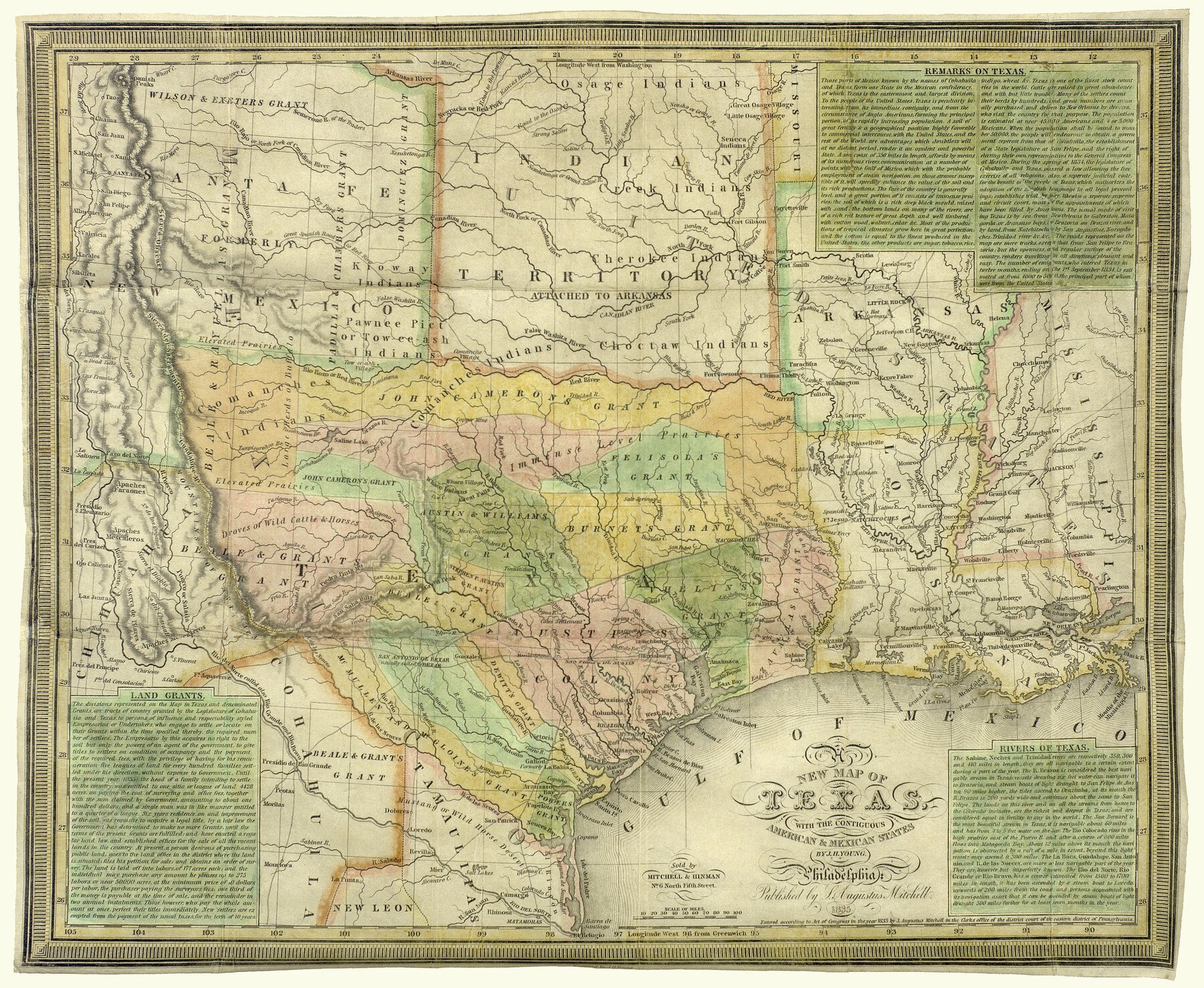
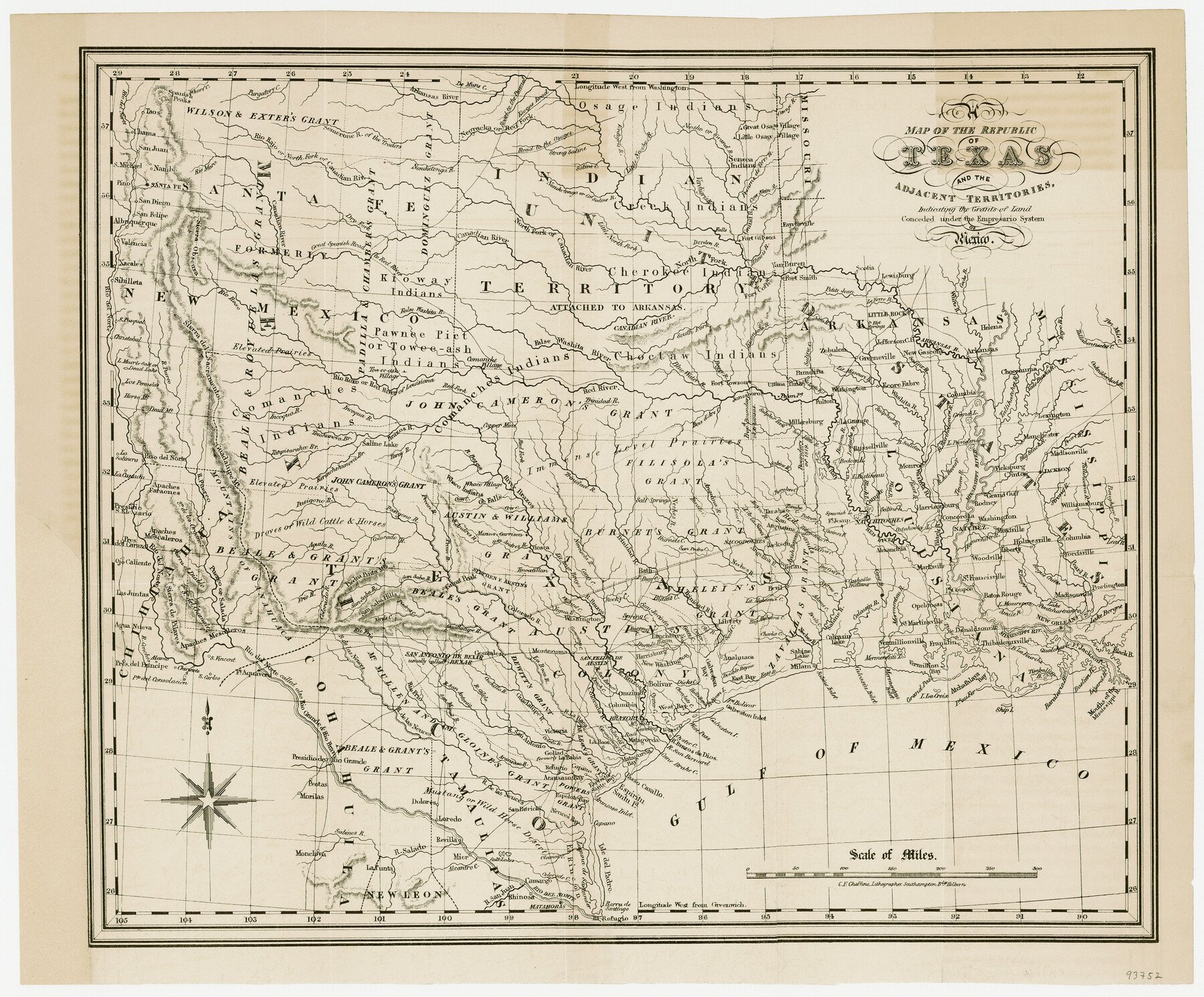
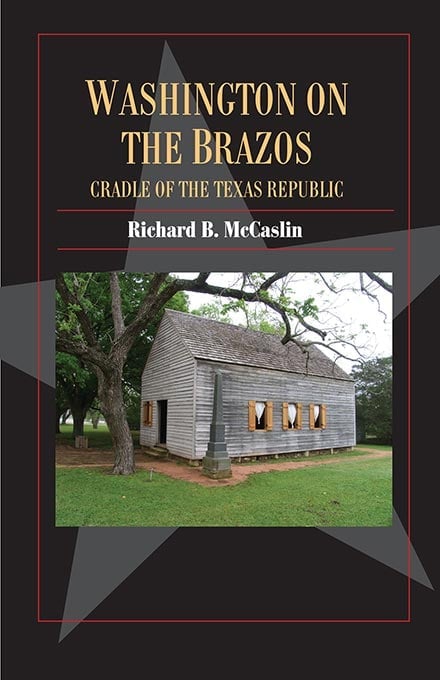
Moses Hughes, Lampasas County pioneer, miller, soldier, and farmer, was born in South Carolina on August 23, 1819, to Bradford and Rebecca (Dobbins) Hughes. When he was very young, the Hughes family moved to Alabama following its recent statehood and hoped to cultivate cotton on the newly available farmland. In 1834, when Moses Hughes was fifteen, seventy related individuals, including his immediate family, were caught up in the G.T.T. (Gone to Texas) movement of pioneer migration and left Talladega County, Alabama. Hughes later recalled, “We had with us tradesmen of all kinds—millwrights, wagonmakers, blacksmiths, gunsmiths, shoe and hatmakers. The most of the others were farmers.” The great attraction of Texas in 1834 was the vast amount of land. Under the federal Land Act of 1820, an American farmer who moved west could purchase eighty acres of public land for $100, but if he moved to Mexican Texas, he could qualify for as much as 4,605 acres (see MEXICAN COLONIZATION LAWS). The Hughes family arrived in Texas in January 1835 and settled near Washington (later known as Washington-on-the-Brazos).
In the spring of 1836 the Hughes family participated in the Runaway Scrape, the desperate retreat from Santa Anna's invading army. In a letter written on January 25, 1885, Hughes described the event. “…the news came to us at night, and by sunup we were on the march. We had only one little Spanish mare, and we packed her up with one bed, some quilts and warm clothing….We went as far as the Neches River….” After Sam Houston’s victory at San Jacinto, Bradford Hughes produced a corn crop on the Neches River, and the following fall, the Hughes family returned to the lands near the townsite of Washington. In 1837 Moses Hughes and his parents were among the eight charter members of the first Baptist church west of the Trinity River, organized at Washington by Baptist missionary Z. N. Morrell. In 1838 the Hughes family moved to Burleson County.
On January 29, 1840, Moses Hughes married sixteen-year-old Hannah Berry in Burleson County. The couple had up to twelve children. In 1847 they moved to the Central Texas region that would become Williamson County, where Hughes’s now widowed mother and other family members resided. The 1850 census recorded Moses Hughes as a farmer. Concerned about his wife's declining health, Hughes left Williamson County in November 1853 and moved to present-day Lampasas County to seek treatment from medicinal springs in the region.
The family was accompanied by Hughes’s brother, Nimrod, and his family, as well as their widowed mother, and eventually settled along Sulphur Creek which is fed by a number of springs. By the mid-1850s Moses Hughes had built a mill, one of the first structures in the Lampasas area and one of the county’s first important businesses, on Sulphur Creek. His wife’s health improved, and the region around Lampasas later earned the reputation as a health resort for its mineral waters. One of the sulphur springs was named Hughes Springs and in 1936 received a Texas Centennial Marker in honor of Moses Hughes, the “first settler in [the] vicinity.” In 1856 Hughes constructed a two-story native stone residence seven miles west of town on a thirty-acre tract acquired from Thomas B. Huling. This site was adjacent to an additional 160 acres already owned by Moses. The house was strategically positioned near a creek, later designated Hughes Creek. The first power plant was established at Hughes Mill in 1890.
In the 1850s and 1860s settlers in Lampasas County faced difficulties due to Comanche raids and established the Lampasas Guards, an outfit to maintain law and order, on July 1, 1859. Later that year Hughes was elected a first lieutenant of Scout No. 2 of the Lampasas Guards and later led a minuteman company under Capt. H. Ryan in 1860. In the 1860 agricultural census, farmer Moses Hughes reported having 100 horses, 100 milch cattle, six working cattle, 200 other cattle, 100 swine, and 66 bushels of Indian corn. During the Civil War, he was appointed as a second lieutenant in a company composed of 127 men led by R. Y. Cross of the Twenty-seventh Brigade, Texas Militia, of Lampasas County, in September 1861 under Brig. Gen. Elijah Sterling Clack Robertson. On February 15, 1864, Moses Hughes enlisted at Lampasas under M. D. Sherman and joined Capt. M. J. Scott’s fifty-seven-man company for Precincts 1 and 4 of Lampasas County. This company was part of the Second Frontier District, Texas State Troops, under Maj. George B. Erath, mustered in on March 5, 1864, at Salt Creek under Thomas Pratt.
After the death of Hannah Hughes in May 1863, Moses Hughes married a young widow named Catherine (Senterfitt) Knight on November 5, 1863. They had four children together before her death in 1872. In 1875 Hughes married Anna Z. Walton; she passed away in 1876. Subsequently, the 1880 census listed Hughes, a miller, living in Lampasas and married to Jennie P (age thirty-one). They left Lampasas in 1893, and the 1900 census recorded them in the Creek Nation area of Indian Territory (present-day Oklahoma). His wife died in 1901. Moses Hughes died at the home of his son in Troy, Bell County, Texas, on April 20, 1903, and was laid to rest at Pleasant View Cemetery in Troy. A historical marker for the Moses Hughes home was erected in Lampasas in 1969. In June 1986 a plaque commemorating Hughes’s status as a citizen of the Republic of Texas was placed at his burial site.
Bibliography:
Historical Marker Files, Texas Historical Commission, Austin, (Moses Hughes Home). Lampasas History Book Committee, Lampasas County, Texas: Its History and its People (Marceline, Missouri: Walsworth Publishing Company, 1991). Lampasas Leader, May 1, 1903. Bill O’Neal, Lampasas, 1855–1895: Biography of a Frontier Texas Town (Fort Worth: Eakin Press, 2012).
Categories:
Time Periods:
Places:
The following, adapted from the Chicago Manual of Style, 15th edition, is the preferred citation for this entry.
William V. Scott, “Hughes, Moses,” Handbook of Texas Online, accessed March 09, 2026, https://www.tshaonline.org/handbook/entries/hughes-moses.
Published by the Texas State Historical Association.
TID:
FHUMO
All copyrighted materials included within the Handbook of Texas Online are in accordance with Title 17 U.S.C. Section 107 related to Copyright and “Fair Use” for Non-Profit educational institutions, which permits the Texas State Historical Association (TSHA), to utilize copyrighted materials to further scholarship, education, and inform the public. The TSHA makes every effort to conform to the principles of fair use and to comply with copyright law.
For more information go to: http://www.law.cornell.edu/uscode/17/107.shtml
If you wish to use copyrighted material from this site for purposes of your own that go beyond fair use, you must obtain permission from the copyright owner.
- August 24, 2025
- August 24, 2025
This entry belongs to the following special projects: