Mae Estella Selden Lusk: Pioneer Businesswoman and Philanthropist (1892–1987)
Published: May 10, 2023
Updated: May 10, 2023
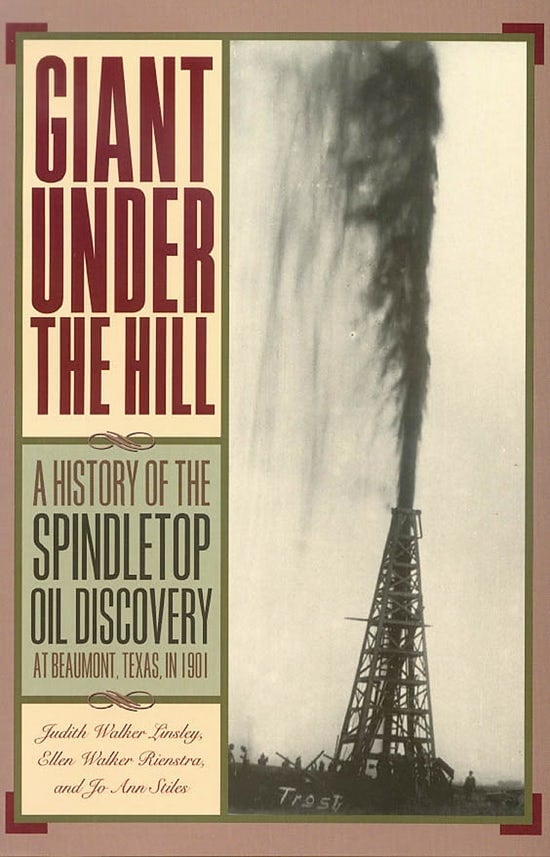
Mae Estella Selden Lusk, businesswoman, independent oil producer, and philanthropist, was born in Durand, Winnebago County, Illinois, on May 15, 1892, to Edwin Burnel Selden and Emma Amanda (Hurd) Selden. She was the eldest of three children. The Seldens owned a hardware store, and the Hurd family owned jewelry and hardware stores. Edwin Selden was a hardware dealer. Both families owned large farms in the area. In 1901, in response to advertisements in Illinois that encouraged people to move to Texas where there were new jobs in the oil industry after the Spindletop discovery, the Selden family moved to South Dayton, Texas. Throughout his life, Edwin Selden was listed as a machinery and statistical engineer, oil well operator, oil driller, and land man.
By 1903 the family moved to Houston and lived in boarding houses for thirteen years. Mae Selden attended Taylor Elementary School and Central High School. The Seldens were members of Christ Church Episcopal. In 1909, when she was about seventeen, Mae took a job to help support the family by working as a switchboard operator for the Southwestern Bell Telephone exchange. By 1911 she was a supervisor.
In her parents’ apartment on February 16, 1917, Mae Selden married Charles Michael Lusk, a young physician in Houston. While her husband practiced osteopathy, Mae was a housewife. Their only child, son Charles Michael “Buzz” Lusk, Jr., was born in 1923. Charles Lusk, in addition to his medical practice, developed a successful oil production business on the Ramsey Prison Farm in Angleton, Brazoria County, Texas, in 1934. In 1940, at the age of forty-nine, he died of heart disease, and Mae Lusk, at age forty-eight, found herself a widow with no choice but to enter the business world as an independent oil producer. In this capacity she participated in “Texas-Oil-For-Britain Day” on August 10, 1941, which the Texas Railroad Commission designated for Texas independent oil producers to donate one day of oil production to Great Britain for the war effort. This campaign was part of the greater “Oil-for-Britain-Day” campaign scheduled on August 17, 1941.
After the death of her husband, Mae Lusk became immersed in the lawsuit regarding the broken chain of title on 150 acres out of 200 acres of the Ramsey Prison Farm in Brazoria County. She continued with production. Her husband had leased the 200 acres of land for oil exploration from the state of Texas in 1934, but the descendants of the original owners of the land filed a lawsuit against him and the state of Texas. A letter dated November 9, 1942, and written by a lawyer at Vinson, Elkins, Weems & Francis on behalf of Mae Lusk requested the state of Texas reimburse her $10,800 paid to the three descendants of W. R. Kyle, who had purchased the land in 1855, and for $33,309.43 to the twelve descendants of Mary Rochelle who subsequently owned the land.
Mae Lusk’s litigation against the state of Texas dragged on in Texas courts until 1949. In early 1949, during his first year as an elected member of the Texas House of Representatives, Robert R. “Bob” Casey introduced a bill authorizing the state to pay for an interest in 200 acres, then a part of the Ramsey State Prison Farm. The total purchase price for the entire tract, part of the J. W. Hall survey in Brazoria County, was $43,000. Attorney General Price Daniel recommended the state buy the land involved in the dispute and clear the title. The case was resolved in favor of Mae Lusk.
In 1943 Mae Lusk formed PLD Well Service Company (PLD stood for Parker, Lusk, and Dutton), a company specializing in work-over wells, whip-stocking, and re-drilling. The first business address was in a back bedroom of her Riverside Terrace home, and her partners were Lloyd E. Dutton (former field supervisor for Glenn McCarthy’s oil production), who served as general superintendent, and accountant William Howard Parker, who served as general manager. Lusk was the financier. After returning from service in the U. S. Army Air Forces during World War II, her son, Charles Michael “Buzz” Lusk, Jr., was vested as an equal partner in April 1946. Eventually PLD, with an office in the Sterling Building in downtown Houston, evolved into a full-fledged drilling company but continued to do work-overs. Described as an astute businesswoman who garnered the respect of her associates, Mae Lusk served a crucial role in the company, as no business discussions or decisions occurred unless she was present. Her son was primarily in the office and worked on acquiring new clients and on business management, but he also made frequent trips to the fields.
PLD’s drilling operations were located in the southeastern part of Texas. Eight drilling rigs were kept busy in Harris County, Brazoria County, Montgomery County, Angelina County, Montgomery County, Liberty County, Orange County, and Polk County. Among PLD’s clients were Shell Oil, Humble Oil (see EXXON COMPANY, U.S.A.), Conoco, Gulf Oil Company, the Texas Company (see TEXACO), and independent wildcatters J. S. Abercrombie, George W. Strake, and John W. Mecom.
In 1956 Howard Parker left PLD Well Service, but Dutton and the Lusks continued the business. Eventually, they divided the equipment, and each proceeded in two separate drilling companies. Lusk and her son continued to operate Lusk Drilling Company until an oil drilling slump and government regulations prompted termination of the company about 1958–59. Throughout her life, she remained active in oversight of the oil production with the help of her son and advising geologist Walter Lazenby William.
As a widow for forty-seven years, Mae Lusk enjoyed a vibrant social life. She was especially fond of music. While a resident of the Rice Hotel and later the Shamrock Hotel, she entertained dinner guests during the days of big-band music in the Empire Room and then the Cork Club and the Emerald Room. Later she was a charter member of the Warwick Club on the top floor of the Warwick Hotel, where she and guests enjoyed live music during dinner. She enjoyed box office tickets to the Houston Symphony and Houston Grand Opera and hosted post-performance dinners for the patrons and performers in her Memorial and River Oaks homes. Lusk and her sister Margaret S. Cartwright were members of the Sherwood Forest Garden Club. She enjoyed card games with her ladies’ groups and engaged in travel, especially trips with her grandchildren. During her summer residencies, Lusk entertained in her Clear Lake bay house, “Lakewood,” and later at her Red Barn Farm in Almeda. The Lusks were members of Palmer Episcopal Church in Houston and later St. John Episcopal Church, where she was active in the St. John’s Sewing Guild.
Mae Estella Selden Lusk passed away at age ninety-five on August 7, 1987, In Houston. She was buried in Forest Park Lawndale Cemetery in Houston. Surviving her were her son Charles Michael Lusk, Jr., and his wife Ursula (Guseman) Lusk, six grandchildren, and nine great-grandchildren.
Bibliography:
Houston Chronicle, October 27, 1946; April 5, 1949; January 29, 1957; August 9, 1987. Houston Post, February 16, 1917. Lubbock Morning Avalanche, October 17, 1934. Charles Michael Lusk, Jr., Interview. 2000. Walter Williams Interview by William H. Kellar, June 29, 2009, Houston, Texas.
Categories:
Time Periods:
Places:
The following, adapted from the Chicago Manual of Style, 15th edition, is the preferred citation for this entry.
Michaelene "Miki" Lusk Norton, “Lusk, Mae Estella Selden,” Handbook of Texas Online, accessed March 09, 2026, https://www.tshaonline.org/handbook/entries/lusk-mae-estella-selden.
Published by the Texas State Historical Association.
TID:
FLUSK
All copyrighted materials included within the Handbook of Texas Online are in accordance with Title 17 U.S.C. Section 107 related to Copyright and “Fair Use” for Non-Profit educational institutions, which permits the Texas State Historical Association (TSHA), to utilize copyrighted materials to further scholarship, education, and inform the public. The TSHA makes every effort to conform to the principles of fair use and to comply with copyright law.
For more information go to: http://www.law.cornell.edu/uscode/17/107.shtml
If you wish to use copyrighted material from this site for purposes of your own that go beyond fair use, you must obtain permission from the copyright owner.
- May 10, 2023
- May 10, 2023
This entry belongs to the following special projects: