Louis Martin: Pioneer Settler of Gillespie County, Texas (1820–1864)
By: Delmar J. Hayter
Revised by: William V. Scott
Published: 1976
Updated: May 27, 2025
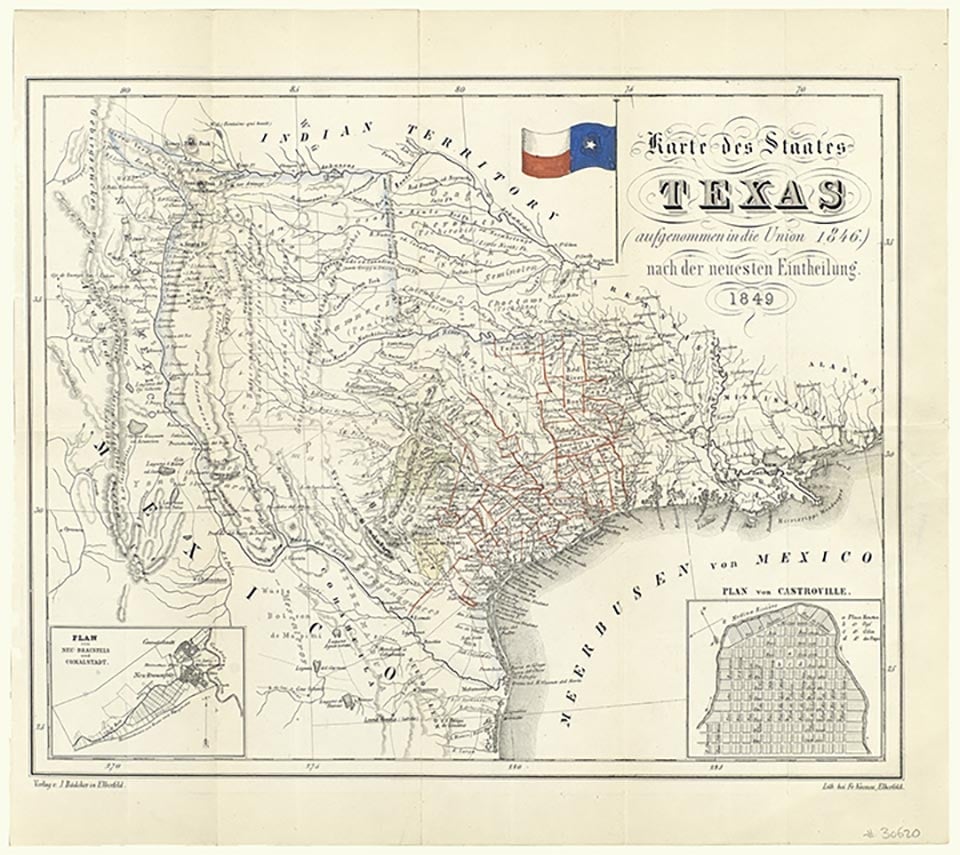
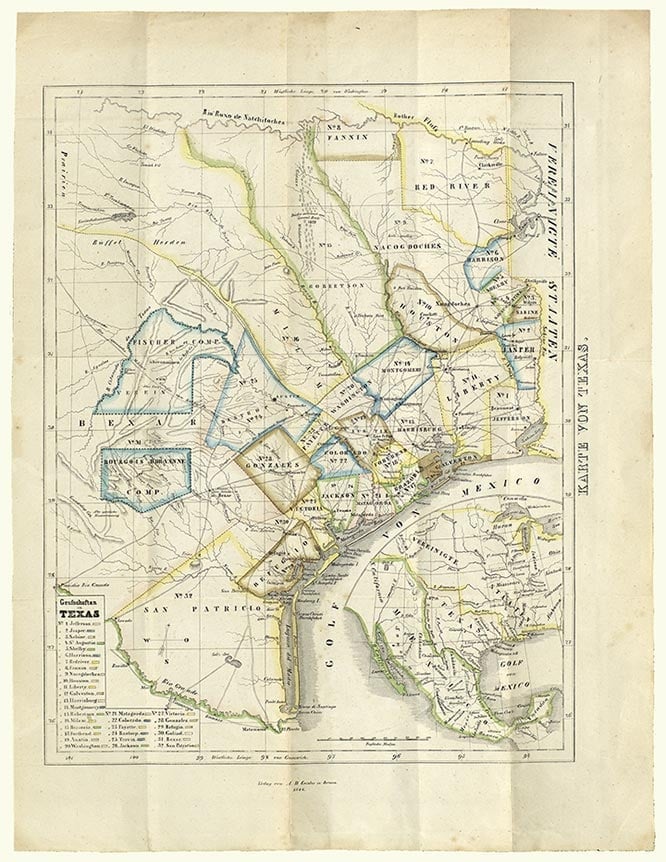
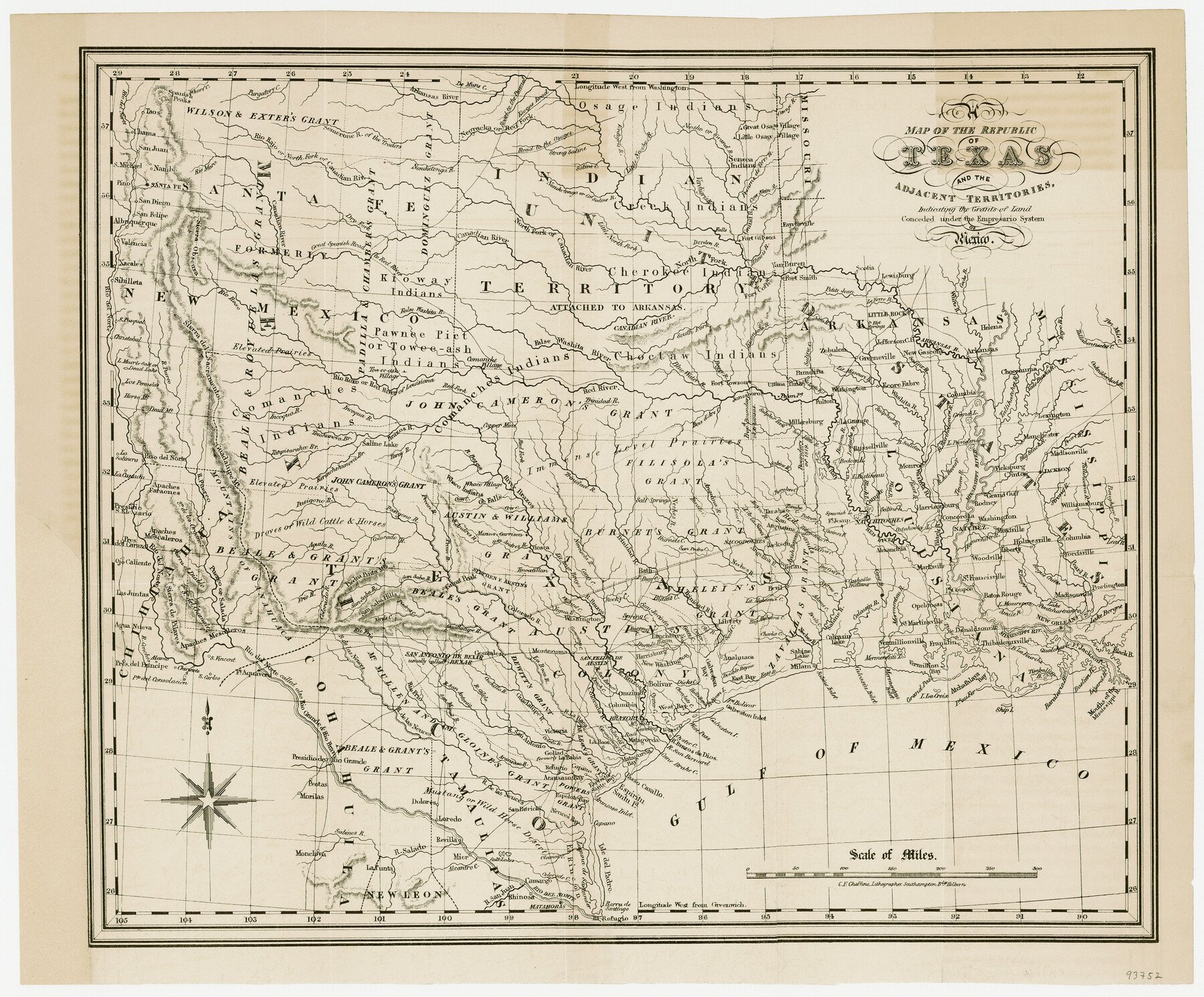
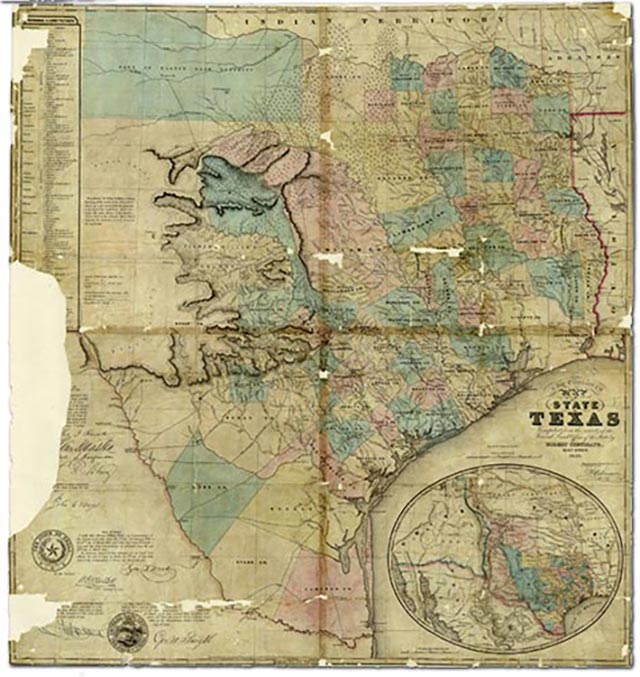
Louis (possibly Ludwig) Martin, pioneer Gillespie and Mason County settler, stock raiser, public servant, frontier soldier, and freighter, was born on November 25, 1820, in Erndtebrück, Westphalia, son of Nicholas and Hedwig (Sinner) Martin. He sailed to Texas with the first shipload of immigrant recruits of the Adelsverein that left Bremen in September 1844, on the Johann Dethardt, which landed at Galveston on November 21, 1844. Martin arrived with Prince Carl of Solms-Braunfels and other Germans who camped on the open beach at Carlshafen (later known as Indianola) in the wet winter of 1844. He was among those who moved to New Braunfels in March 1845, and from there he proceeded west with other German settlers to the area of present-day Fredericksburg, where he helped establish Gillespie County on December 15, 1847. Louis Martin built a stone house in Fredericksburg and had one of the first stores in the community. As a result of John O. Meusebach’s treaty with the Comanches (see MEUSEBACH-COMANCHE TREATY), they had friendly trade relations with local American Indian groups that sold or exchanged bear, buffalo, and deer meat, bear fat, honey, and horses with the settlers. After Fort Mason was established in 1851, Martin’s store was a popular trading center for those associated with the post. He was chosen as the first sheriff of the newly-established county in June 1848 and served through 1850, serving for $50 a year. He was also the district clerk.
Louis Martin married Elizabeth Arhelger of Rittershausen, Nassau, on October 16, 1847, in San Antonio. His wife had immigrated to Texas in 1845 with her parents, Johann Jacob and Elisa (Mueller) Arhelger. They had eight children—Hedwig (reportedly the first White child born in Fredericksburg), Caroline, Amelie, Carl, Alexander, Wilhelmine, Louise, and Emilie. The census of 1850 listed Martin as a farmer with a net worth of $1,500, a relatively large estate for the time and circumstances. On the agriculture census of 1850, Louis Martin was listed near Zodiac (a Mormon community) in Gillespie County, where he operated a farm of thirty improved acres and ninety unimproved acres, with five dairy cows, four oxen, ten cattle, fifteen head of swine, and produced about 400 bushels of Indian corn. This inventory of Martin’s stock shows the standard practices of German immigrants—they preferred the lower economic cost of keeping oxen which received less feeding and were deemed undesirable by horse-favoring Comanches. Swine were raised in the wooded bottomlands of rivers and creeks of the Hill Country, and hog production became a significant market for German farmers like Martin. Many immigration guidebooks endorsed corn as the best-suited crop because of its ease of cultivation, quick maturation, and high yield. In addition to farming and livestock raising, he provided freight service to area military installations throughout the Hill Country, East Texas, and even Mexico. He sold forage and general supplies to the public and local soldiers. He began buying and trading land early in the 1850s.
By 1853 Martin had moved to Willow Creek and settled on the north bank of the Llano River in what would soon be Mason County. With other German settlers, he founded what became known as Hedwig's Hill, named for his mother and first daughter. The community was on a significant trade route, the Pinta Trail, and served as headquarters for Martin’s farming, ranching, and freight-hauling business. For additional money, the family hosted travelers. In 1855 Martin bought several sections in Gillespie County, just south of Fort Mason. In 1856 Martin built a store at Hedwig’s Hill and also had a good trading relationship with the region’s Indians. The Martin family was Catholic, and Masses were held in their home at various times. Martin established the second post office in Mason County at Hedwig's Hill (the first post office was at Fort Mason) and was appointed postmaster on June 29, 1858. His nephew, Charles Karl Martin, later became postmaster on August 21, 1861, after Texas had joined the Confederacy.
In 1860 Louis Martin was listed as a stock raiser with a net worth of more than $9,000 that included 900 acres of land and 200 head of livestock. In addition to Martin’s family in the 1860 census, his household included G. H. Fuchs, a teacher who instructed their five children at home, and Christian Johnan (Johnson), a Danish farm laborer. It was also in 1860 that Martin’s family left Hedwig's Hill and moved closer to Elm Creek to the east. Martin was elected justice of the peace in Mason County in 1861 and 1862 and became one of the wealthiest men in the county. He had 410 head of cattle, a herd of hogs, horses, and four wagons. He enlisted in March 1861 in Mason County and served as a private in Capt. Hermann Bieberstein’s Mason County Minute Men to provide frontier defense. He also served in Mason County's Company No. 1, Second Frontier District, Texas State Troops under Capt. Alf Hunter during February 1864. Martin continued his farming, ranching, trading, and freighting business during the war years, when he shared the pro-Union sympathies of many German Texans. The primary shipments from Hedwig’s Hill were cotton and livestock.
Martin often hauled cotton to various points in Mexico, including Matamoras and Piedras Negras, where it could be sold or traded for merchandise, which he transported to Hedwig's Hill. In June 1864 Martin and his niece's husband Eugene Frantzen hauled bacon and salt pork south across the Rio Grande to Piedras Negras (a trip that generally took about two weeks) and bought supplies for the return trip. They were seized by unknown assailants on June 16, 1864, and hanged at the Nueces River crossing, possibly for the money he was supposed to have or perhaps by Confederates, since he was eligible for the draft but had not joined the army. His wife was informed of the killing by the culprits, who had traveled back to Mason County, and she made the journey to recover the bodies. Louis Martin was buried in Fredericksburg City Cemetery (Der Stadt Friedhof). His wife and children stayed at Elm Creek until 1867, when they moved back to her first home in Fredericksburg. Daughters Hedwig and Amelie operated the first telegraph and telephone system in Fredericksburg. The last dwelling at the old Hedwig’s Hill townsite, which was reportedly the home of Louis Martin, was moved to the National Ranching Heritage Center at Texas Tech University in 1971.
Bibliography:
Rudolph L. Biesele, The History of the German Settlements in Texas, 1831–1861 (Austin: Von Boeckmann-Jones, 1930; rpt. 1964). Gillespie County Historical Society, Pioneers in God's Hills (2 vols., Austin: Von Boeckmann-Jones, 1960, 1974).
Categories:
Time Periods:
The following, adapted from the Chicago Manual of Style, 15th edition, is the preferred citation for this entry.
Delmar J. Hayter Revised by William V. Scott, “Martin, Louis,” Handbook of Texas Online, accessed March 09, 2026, https://www.tshaonline.org/handbook/entries/martin-louis.
Published by the Texas State Historical Association.
TID:
FMA61
All copyrighted materials included within the Handbook of Texas Online are in accordance with Title 17 U.S.C. Section 107 related to Copyright and “Fair Use” for Non-Profit educational institutions, which permits the Texas State Historical Association (TSHA), to utilize copyrighted materials to further scholarship, education, and inform the public. The TSHA makes every effort to conform to the principles of fair use and to comply with copyright law.
For more information go to: http://www.law.cornell.edu/uscode/17/107.shtml
If you wish to use copyrighted material from this site for purposes of your own that go beyond fair use, you must obtain permission from the copyright owner.
- 1976
- May 27, 2025