The Life and Legacy of Osceola Douglas Mays: A Preserver of Oral Traditions (1909–2004)
By: Zac Christian
Published: February 19, 2025
Updated: February 19, 2025
Osceola Douglas Mays, singer, storyteller, and preserver of oral traditions, was born on December 13, 1909, in Waskom, Texas, a rural East Texas community in Harrison County near the Louisiana border. She was the daughter of Albert and Azalean Douglas, Black sharecroppers. Her given name may have been Garnell—a name she later recalled may have been the name of a White girl who lived in the area. Custom held that Black parents named their children after specific members of the White community as a holdover from the days of slavery. The 1910 census also listed a child named Maynoria who would have been about her age. Mostly, her family just called her “Sister” until she was three or four years old, when an American Indian man named Osceola passed through the area. Sister Douglas took a liking to the man because he gave the children candy, and she asked to have his name. With his permission and encouragement, she became Osceola.
Living in the era of segregation in the Jim Crow South, the Douglas family, like all their African American neighbors, was poor and lived on the fringes of Waskom; White families lived in town. The Black community maintained its unity and its spirits through storytelling, singing traditional songs, and reciting poetry. Osceola absorbed this oral heritage from her grandmother, Laura Walker, who had been ten years old when slavery came to an end, and from her mother, who performed domestic work and began teaching poems and spirituals to Osceola when she was six. Memorable songs from her mother included “Swing Low, Sweet Chariot,” and “Wade in the Water.” Osceola Douglas later also cited her early musical experiences at Boggy Bayou Baptist Church, where she heard such spirituals as “I’m Going Down to the Big Baptizing,” and “Amazing Grace.” She was baptized in the church when she was eight. Osceola also recalled hearing blues from men working in the fields.
When her mother died in childbirth, ten-year-old Osceola and her siblings lived with her paternal aunt and family, as her father left Waskom to look for work in West Texas. She later described the experience as abusive. After about a year, her father returned and remarried and moved his family to Louisiana for a time before returning to Waskom. Her life improved in this new arrangement because her stepmother, Gertrude, treated Osceola and her brothers like they were her own children.
As a teenager, Osceola Douglas began building her repertoire. In school, she began writing her own poems, as well as continuing to learn from people in her community and from reading books of poetry. Throughout her life she retained the stories and poems of the oral tradition of her family. Part of this grew out of necessity: their family could not afford anything beyond the bare essentials, so there were no spare sheets of paper or pencils to use on extracurricular activities such as writing down poems—memorization held the only option for permanence.
She attended school through the eleventh grade, the highest grade level in many schools in the early twentieth century. In adulthood, she put aside her cultivation of poetry and song and, like her mother and grandmother before her, she entered domestic service for White families in the town, as life in rural Texas in the late 1920s provided few opportunities for Black women.
In 1935 Osceola Douglas met Clarence Mays, a sharecropper with a daughter named Loretha. They married on January 24, 1936, and Osceola became a stepmother to Clarence’s daughter. In 1945 the Mays family moved to Dallas, where they remained for the rest of their lives. Both Clarence and Osceola spent their working lives at odd jobs. While her husband initially performed janitorial work, then served as a nurse’s aide at Parkland Memorial Hospital, and subsequently was employed at a dry cleaning business, Osceola Mays worked at a drugstore counter and then worked as a domestic maid.
When her husband’s health began declining in the 1980s, Osceola Mays stopped working at menial jobs to take care of him, and she never returned to that line. Clarence Mays died on November 20, 1985, just shy of their golden anniversary. After his death, Osceola lived off of a small Social Security payment that provided her with just enough money to cover her bills. Freed from work, Mays devoted the next two decades to sharing her songs, stories, and poems with people around the Dallas area. She preserved the oral traditions she carried in her mind by sharing them with new generations. She regularly visited classrooms across the city to talk to students about her life and the experiences of the rural Jim Crow South, introducing them to the realities of hardship and pain in that situation as well as the creativity and joy that the Black community created out of the period. Mays took part in such programs as Folk Artists in Schools, events such as the Dallas Folk Festival, and gave performances at the Dallas Black Academy of Arts and Letters and the Dallas African American Museum. She also led an active life in her community church, the Good Street Baptist Church, where she sang in the choir and taught Sunday School.
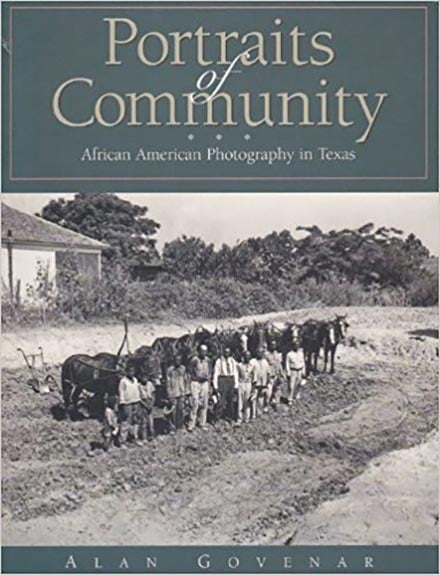
In the early 1980s and before her husband’s death, Mays befriended writer and music documentarian Alan Govenar, who spent most of two decades talking to Osceola and recording her as she recounted her tales and songs in order to preserve her life’s work for future generations. In collaboration with Govenar, Mays recorded an album, Osceola Mays: Spirituals and Poems, released on cassette in 1988. In 1989 she was part of a touring program “Texas in Paris,” organized by Govenar, in which she performed at Centro Flog in Florence, Italy, and Maison des Cultures du Monde in Paris, France. Moved by the experience, Govenar was later inspired to produce a musical, Texas in Paris, about the tour. He filmed a documentary, Osceola Mays: Stories, Songs & Poems, released in 1996. In connection with his work with her, Govenar also assembled her stories of her youth into an illustrated children’s book, Osceola: Memories of a Sharecropper’s Daughter (2000). Osceola Mays passed away in Dallas on April 20, 2004, and was buried in Lincoln Memorial Park.
Bibliography:
Dallas Morning News, November 14, 2017; April 26, 2004. Alan Govenar, Everyday Music (College Station: Texas A&M University Press, 2012). Alan Govenar, ed., Osceola: Memories of a Sharecropper’s Daughter (New York: Hyperion Books for Children, 2000). Alan Govenar, Texas Blues: The Rise of a Contemporary Sound (College Station: Texas A&M University Press, 2008). Osceola Mays: Spirituals and Poems (1988), Documentary Arts (https://www.docarts.com/osceola_mays-cd.html), accessed February 12, 2025.
Categories:
Time Periods:
The following, adapted from the Chicago Manual of Style, 15th edition, is the preferred citation for this entry.
Zac Christian, “Mays, Osceola Douglas,” Handbook of Texas Online, accessed March 09, 2026, https://www.tshaonline.org/handbook/entries/mays-osceola-douglas.
Published by the Texas State Historical Association.
TID:
FMAYS
All copyrighted materials included within the Handbook of Texas Online are in accordance with Title 17 U.S.C. Section 107 related to Copyright and “Fair Use” for Non-Profit educational institutions, which permits the Texas State Historical Association (TSHA), to utilize copyrighted materials to further scholarship, education, and inform the public. The TSHA makes every effort to conform to the principles of fair use and to comply with copyright law.
For more information go to: http://www.law.cornell.edu/uscode/17/107.shtml
If you wish to use copyrighted material from this site for purposes of your own that go beyond fair use, you must obtain permission from the copyright owner.
- February 19, 2025
- February 19, 2025
This entry belongs to the following special projects: