Romana Rios Ramos: Pioneering Midwife and Businesswoman in San Antonio's West Side (1881–1969)
By: Anathea Carrigan
Published: January 21, 2026
Updated: January 21, 2026
Romana Rios Ramos, midwife and businesswoman, daughter of Evaristo Rios and Valentina Castillo, was born on February 28, 1881. Civil registration documents record that she was born in Guerrero, Tamaulipas, Mexico, though some biographical accounts later stated that she was born in Selma, Texas, near San Antonio, and census records vary between Mexico and Texas regarding her birthplace. According to civil registration records, Romana Rios married Isidro Ramos in Camargo, Tamaulipas, Mexico, on February 25, 1896. They had daughters Agapita and Carolina. The 1910 census also listed a daughter, Juanita, and some sources state that another daughter, Gloria, was adopted by Romana in the late 1920s. By the early 1900s Romana moved to San Antonio with her family and remained there for the rest of her life. Though she was listed as married in the 1910 census and with her husband in the 1910 San Antonio city directory, the couple apparently became estranged, and subsequent censuses listed her as widowed.
Romana Ramos began her work as a midwife by 1911, but during her early career, she pursued many other kinds of work alongside midwifery, including managing a restaurant and grocery store, a clay figurine-making business, and a taxi company. Reportedly, she traveled to China, where she trained as a seamstress for three months in 1913. The revenue from these businesses supported her in her later career, as she was known to often waive delivery fees for families who could not afford her midwifery services.
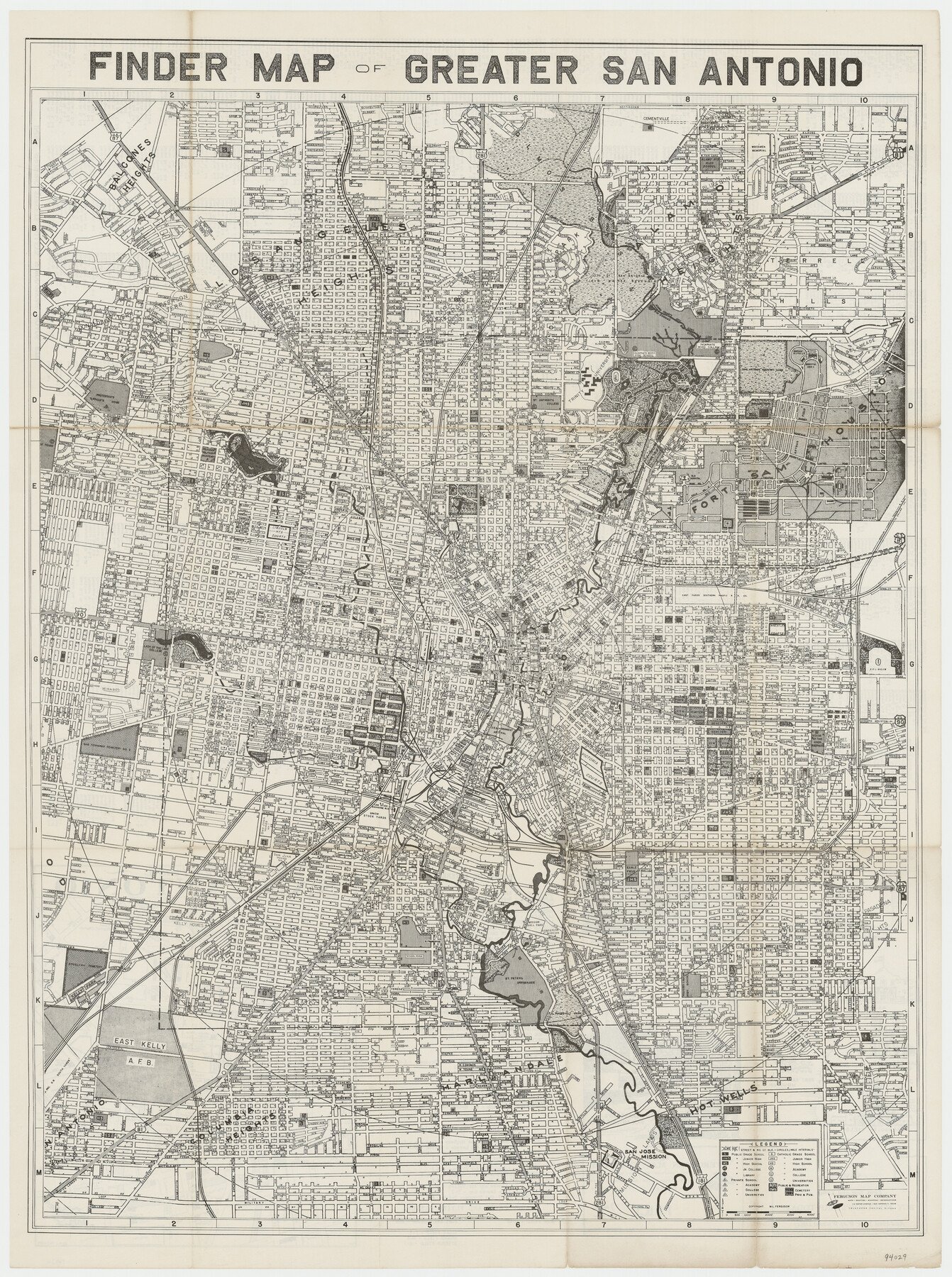
In 1927 Ramos opened her maternity home, La Casa de Maternidad, in a two-story building at 315 Matamoros Street. The home, meant to serve as a refuge for single mothers and their newborn infants, was located in an area that historically had served as a red-light district and was near a former brothel that had been transformed into an orphanage and daycare center by the Carmelite Sisters to assist the working poor in the neighborhood. Given the close proximity of La Casa de Maternidad, it is likely that Ramos helped create a safe space for women to deliver children resulting from unplanned pregnancies. La Casa de Maternidad was later relocated to 410 Matamoros Street.
As a midwife, Ramos’s main responsibility was assisting with births. Her formal education is not well-documented; however, it is known that she took classes offered by local physicians to gain her certification in delivering babies. She primarily served the Hispanic community as well as the poor and working class on San Antonio’s West Side. She often traveled to nearby towns such as Somerset, Lytle, Elmendorf, and Lacoste to assist in home births. Early travel was done by horse and buggy; she later drove a Model T Ford. As a devout Catholic, Ramos often helped promote healthy pregnancy practices and preventive measures for her patients. Accounts have stated that she never lost a mother in all her years of practice, a claim asserted by Ramos herself in a feature on San Antonio’s midwives (parteras) in the San Antonio Express in 1950. She assisted in the delivery of as many as 15,000 children during her career before her retirement by the early 1960s.
Ramos may have been a part of La Sociedad de Damas Profesionistas en Obstetricia, a local organization for midwives in San Antonio. Membership in this organization provided opportunities for professional development and facilitated community-building with other midwives. She was also a dedicated member of the San Fernando Catholic parish in San Antonio. Her obituary stated that she belonged to the Woodmen of the World, Blue Bonnet Grove Chapter. Her political affiliations were unknown.
Although Ramos did not receive any official awards for her work, she was very well-regarded in the Hispanic community of San Antonio’s West Side and received recognition in the city directory in 1948 as the “First Midwife in San Antonio.” Ramos’s daughter, Agapita, worked alongside her as a midwife and delivered more than 4,000 children before her retirement.
On March 5, 1969, Romana Rios Ramos passed away in San Antonio. Her funeral Mass was held at San Fernando Cathedral, and she was buried at San Fernando Cemetery No. 1. The sign reading “R. R. Ramos Midwife” that once marked La Casa de Maternidad has been preserved by the Esperanza Peace & Justice Center as part of a collection honoring the history of San Antonio’s West Side.
Bibliography:
Gisell Campos, “‘Mexican culture is still alive here’: Museo del Westside to honor community’s heritage and stories,” San Antonio Report, October 16, 2025 (https://sanantonioreport.org/museo-del-westside-to-honor-communitys-heritage-and-stories/), accessed January 12, 2026. Bri Kirkham, “Why Did San Antonio’s Most Famous Brothel Lose Its Historic Designation?” Texas Public Radio, June 10, 2021 (https://www.tpr.org/arts-culture/2021-06-10/why-did-san-antonios-most-famous-brothel-lose-its-historic-designation), accessed January 12, 2026. La Prensa, November 13, 1928. “Romana Ramos 1881–1969,” Museo del Westside (https://www.museodelwestside.org/women-activism/romana-ramos), accessed January 12, 2026. Parteras, Hierbitas y Remedios: Women as Healers, Museo del Westside (https://www.museodelwestside.org/women-activism/themes/parteras%2C-hierbitas-y-remedios), accessed January 12, 2026. Ramos and Bonilla Midwife Records in San Antonio, Texas, 2020-015, Texana/Genealogy Collections, San Antonio Public Library. San Antonio Express, September 17, 1950. San Antonio Express-News, May 30, 2021. San Antonio Light, March 6, 1969.
Categories:
Places:
The following, adapted from the Chicago Manual of Style, 15th edition, is the preferred citation for this entry.
Anathea Carrigan, “Ramos, Romana Rios,” Handbook of Texas Online, accessed March 09, 2026, https://www.tshaonline.org/handbook/entries/ramos-romana-rios.
Published by the Texas State Historical Association.
TID:
FRAMO
All copyrighted materials included within the Handbook of Texas Online are in accordance with Title 17 U.S.C. Section 107 related to Copyright and “Fair Use” for Non-Profit educational institutions, which permits the Texas State Historical Association (TSHA), to utilize copyrighted materials to further scholarship, education, and inform the public. The TSHA makes every effort to conform to the principles of fair use and to comply with copyright law.
For more information go to: http://www.law.cornell.edu/uscode/17/107.shtml
If you wish to use copyrighted material from this site for purposes of your own that go beyond fair use, you must obtain permission from the copyright owner.
- January 21, 2026
- January 21, 2026
This entry belongs to the following special projects: