Charles C. Sweeney: Confederate Soldier and Influential Galveston Figure (1838–1892)
By: Steven W. Hooper
Published: May 27, 2025
Updated: May 27, 2025
Charles Cornellus (or Cornelius) Sweeney, Confederate soldier, politician, and stevedore, played a significant role in the commercial and political history of Galveston, Texas. He was born in Boston, Massachusetts, in 1838. While details about his parents (possibly Irish immigrants) and formal education remain unknown, he earned a reputation as an avid reader and later in life possessed one of the finest private libraries in Galveston. At the age of fifteen, he embarked on a life at sea. By 1856 he settled in Galveston and began working on the bustling waterfront, launching a career which would define his life. In 1858 Sweeney married Martha Jane “Jennie” Smith in Galveston. Together they raised four children: John, Charles, George, and Jennie. The 1860 United States federal census lists his occupation as a laborer.
During the Civil War, Sweeney enlisted as a private with Company B of Joseph Jarvis Cook’s Third Texas Confederate Heavy Artillery Battalion, later reorganized as the First Regiment, Texas Heavy Artillery under Colonel Cook (see CONFEDERATE HEAVY ARTILLERY). This regiment was tasked with defending Galveston and other key ports along the upper Texas coast. Sweeney’s regiment participated in several notable engagements, including the October 1862 battle of Galveston, the New Year’s night recapture of Galveston, and the decisive battle of Sabine Pass on September 8, 1863. As the war waned, the regiment transitioned to service in the Confederate Navy.
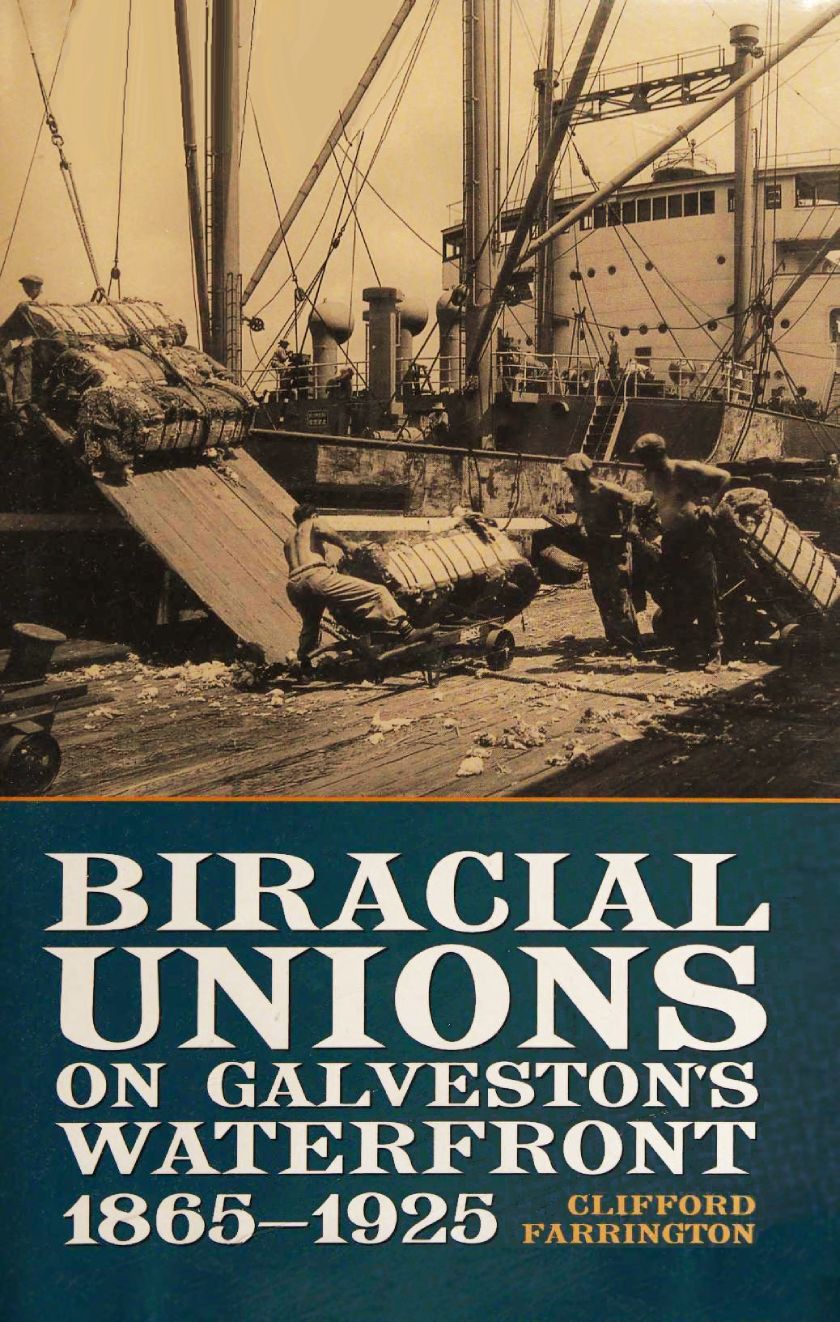
After the war, Sweeney faced financial hardship but rebuilt his fortune by working as a stevedore and founding Charles C. Sweeney & Company, a stevedoring business headquartered on the Strand in Galveston. A stevedore supplies labor (longshoremen) to load and unload cargo ships, and Sweeney’s firm grew to be the city’s largest employer. His business ventures expanded into shipping, and he was instrumental in establishing the Galveston & Liverpool Steamship Company and another enterprise that transported cotton to northeastern U.S. ports. His brother, Thomas H. Sweeney, joined him in Galveston in 1868 and worked with him prior to founding his own successful stevedore and ship brokerage business.
In March 1879 Texas governor Oran Milo Roberts appointed Sweeney to the board of pilot commissioners for the port of Galveston, a position he held for an indeterminate period. The April 16, 1891, edition of the Brenham Weekly Banner confirmed that both Charles and Thomas Sweeney were active pilot commissioners at the port of Galveston.
Politically, Sweeney was a resolute Democrat though he never sought elected office. He represented Texas as a district delegate at three Democratic National Conventions, including the 1884 convention that nominated Grover Cleveland for president. Upon Cleveland’s election, Sweeney’s political influence earned him the prestigious presidential appointment of collector of customs for Galveston. His appointment was confirmed by the U.S. Senate on May 18, 1885.
As collector of customs, Sweeney used his political influence to champion vital infrastructure improvements at the port of Galveston. He played a key role in advocating the construction of jetties to deepen the port’s waters, enabling larger ships to dock directly without relying on cargo lighters. This advancement reduced costs, increased efficiency, and boosted Galveston’s commerce. Sweeney held the position until 1889, when he was succeeded by Republican Norris Wright Cuney.
Charles C. Sweeney passed away from an “attack of apoplexy” on August 22, 1892, at his home located at 11th and Strand in Galveston. He was fifty-four years of age. The Galveston Daily News praised his enduring influence on the city’s history and highlighted his generosity and integrity. It noted that many of his charitable acts were known only to their beneficiaries. The Houston Post described his funeral as “the largest cortege seen in Galveston for many years,” with mourners from “all shades and conditions of life” paying tribute to his legacy. The Dallas Morning News honored him as a man of “rugged integrity” who commanded the highest respect of his community. Sweeney was a Catholic, and his funeral was held at St. Mary’s Cathedral. He was interred in the Catholic Cemetery in Galveston.
Bibliography:
Austin Daily Statesman, August 23, 1892. Brenham Weekly Banner, April 16, 1891. Corpus Christi Caller, October 4, 1885. Dallas Morning News, May 19, 1886; August 23, 1892. Galveston Daily News, August 23, 1892. History of Texas, Together with a Biographical History of the Cities of Houston and Galveston (Chicago: Lewis, 1895). Houston Daily Post, August 24, 1892. St. Louis Daily Globe-Democrat, July 21, 1889.
Categories:
Time Periods:
Places:
The following, adapted from the Chicago Manual of Style, 15th edition, is the preferred citation for this entry.
Steven W. Hooper, “Sweeney, Charles Cornellus,” Handbook of Texas Online, accessed March 09, 2026, https://www.tshaonline.org/handbook/entries/sweeney-charles-cornellus.
Published by the Texas State Historical Association.
TID:
FSWEE
All copyrighted materials included within the Handbook of Texas Online are in accordance with Title 17 U.S.C. Section 107 related to Copyright and “Fair Use” for Non-Profit educational institutions, which permits the Texas State Historical Association (TSHA), to utilize copyrighted materials to further scholarship, education, and inform the public. The TSHA makes every effort to conform to the principles of fair use and to comply with copyright law.
For more information go to: http://www.law.cornell.edu/uscode/17/107.shtml
If you wish to use copyrighted material from this site for purposes of your own that go beyond fair use, you must obtain permission from the copyright owner.
- May 27, 2025
- May 27, 2025