David E. Twiggs: Confederate General and U.S. Army Officer (1790–1862)
By: Thomas W. Cutrer and David Paul Smith
Revised by: William V. Scott
Published: 1952
Updated: April 27, 2023
David Emanuel Twiggs, military general officer, United States commander of the Department of Texas during the secession crisis, and Confederate general, was born at Good Hope Plantation in Richmond County, Georgia, on February 14, 1790. He was the son of Gen. John Twiggs, a soldier that raised a brigade at the beginning of the American Revolution and also served in the War of 1812, and Ruth (Emanuel) Twiggs. David E. Twiggs’s long career of military service began at age twenty-two, when he volunteered and received an appointment from Georgia as a captain in the Eighth United States Infantry on March 12, 1812. During his career he became known as “Old Davy,” the “Bengal Tiger,” and “The Horse.” He was promoted to major of the Twenty-eighth U. S. Infantry on September 21, 1814, and was honorably discharged on June 15, 1815, Twiggs was reinstated as captain of the Seventh U. S. Infantry on December 2 and carried his earlier brevet rank of major. He was transferred to the First U. S. Infantry on December 14, 1821. Twiggs was promoted to major on May 14, 1825; lieutenant colonel of the Fourth U. S. Infantry on July 15, 1831; and colonel of the Second U. S. Dragoons on June 8, 1836. He distinguished himself in the service of the Black Hawk War and served in the Seminole Wars under generals Andrew Jackson and Edmund P. Gaines.
During the Mexican War, Twiggs was colonel of this regiment, and he served ably under Zachary Taylor’s army of occupation which marched into the disputed territory. When Taylor moved to the Rio Grande, Colonel Twiggs was in the advance and captured Point Isabel. For “gallant and meritorious conduct” at the battles of Palo Alto and Resaca de la Palma, he was promoted and brevetted to brigadier general on June 30, 1846. After the storming and capture of Monterrey, he was brevetted major general on September 23, 1846, for which by resolution on March 2, 1847, Congress voted him a sword and gold scabbard. At Monterey he was put in command of a division and, after the capture of the city, Twiggs remained there until ordered to join Gen. Winfield Scott at Vera Cruz, where he served under Scott in the campaign to capture Mexico City. He led the main attack at Cerro Gordo as well as a column in the final assault upon the city of the Montezumas. After the war Twiggs was given a sword by the Georgia legislature and yet another by the city of Augusta, Georgia. He then served in various departmental commands to include commander of the Eighth Military Department (Texas), headquartered in New Orleans and Galveston, from November 1, 1848, through December 26, 1848, when he was relieved by Maj. Gen. William J. Worth, who moved departmental headquarters to San Antonio. His subsequent service was in command of the Department of the West, with headquarters at St. Louis until 1857, when he was reassigned command of the Department of Texas on March 18, 1857, and assumed command on that day at headquarters, which was again at San Antonio.
Twiggs served in San Antonio through March 24, 1858, when Col. Henry Wilson took temporary command through June 1, 1858. During this time, Twiggs was court-martialed for a breach of military discipline after contradicting an opinion of President James Buchanan. Twiggs was relieved of command for several weeks but returned to his post in June and served through December 7, 1859, when he was relieved by Lt. Col. Washington Seawall. He was absent on sick leave from his command for most of 1860, replaced temporarily by Robert E. Lee, but he returned to San Antonio when assigned on November 7, 1860, and resumed command on November 27, 1860, in the midst of the secession uproar. Certain, after Lincoln's election, that the Union would be dissolved, he resolved never to fire upon American citizens. As a strong advocate of state's rights, he repeatedly asked Washington for instructions and stated that he did not assume that the government desired him to carry on civil war in Texas and that he consequently would turn over the army property in his department to the government of the state after Texas seceded. In 1860 Twiggs was one of four generals of the line in the United States Army. Others included William Harney, Winfield Scott, and John Wool. In 1861, with the rank of brevet major-general, Twiggs was the second officer of the U. S. Army in seniority and, in the event of the death or disability of General Scott, would have been the ranking officer. On January 13 he requested that he be relieved of command, but orders to that effect were not issued until January 28, and then the necessary papers were sent by mail rather than courier.
On February 1, 1861, the state Secession Convention adopted an ordinance of secession, and three days later appointed commissioners to confer with Twiggs at his San Antonio headquarters. General Twiggs reported to the adjutant-general’s office on February 4 that the secession ordinance had passed the convention of the state and was to be voted on by the people of Texas on February 23. The appointed committee was empowered to demand, "in the name of the people of the State of Texas," those United States arms, stores, and munitions under his control. Should Twiggs decline to surrender the government property to the commissioners, Benjamin McCulloch was commissioned to take the place by force. On February 8 the commissioners at San Antonio reported that Twiggs, momentarily expecting the arrival of his replacement, was willing to maintain his troops in their quarters until March 2 or until he was relieved. If, however, the state should ratify its secession ordinance before that time, he would "deliver all up" to the committee. He "expressed a fixed determination," however, to march the troops under his command out of San Antonio under arms and with all of their transportation facilities and extra clothing. The commissioners sent Samuel A. Maverick to obtain Twiggs's promise in writing. When Twiggs refused this demand, the commissioners sent a rider to McCulloch with orders that he "bring as large a force as he may deem necessary, and as soon as possible to San Antonio." Confronted with a situation in which he could not reconcile his duties as a soldier with his belief in the state's right of secession, Twiggs appointed a military commission on February 9 to meet the commissioners. The question of what his men could take with them when they evacuated Texas was close to settlement when, on February 15, Twiggs received Special Order No. 33 of the War Department dated January 28, which relieved him of command and appointed Col. Carlos Adolphus Waite of the First Infantry, next senior officer in the department, as his successor. Waite, a New Yorker, was a strong Unionist, and the Texans reasoned that he would not surrender the federal property. The committee ordered McCulloch to move on San Antonio. If Twiggs's command "should express a desire to depart the country peaceably," McCulloch was instructed to allow them to do so under honorable terms.
McCulloch posted his men on the surrounding rooftops to command the buildings occupied by federal troops and picketed Twiggs's quarters, a mile outside of town, to prevent the federal commander from communicating with his forces in San Antonio. Near 7:00 A.M., McCulloch demanded the surrender of the troops in San Antonio. Without firing a shot, they capitulated. In the meantime, Twiggs was placed under arrest and escorted into San Antonio. There the commissioners required him "to deliver up all military posts and public property held by or under [his] control." Although willing enough to surrender the other public property, Twiggs repeatedly assured Maverick and his fellow commissioners Thomas Jefferson Devine and Philip Noland Luckett that "he would die before he would permit his men to be disgraced by a surrender of their arms." Wishing to avoid a bloody confrontation, the commissioners were willing to compromise on that issue. After "a stormy conference between the department commander and the commissioners," Twiggs agreed that the 160 United States soldiers in San Antonio would surrender all public property, an inventory estimated at $1.3 million in value. Twiggs and the commissioners further agreed that all forts in Texas would be turned over to Texas state troops, and their garrisons were to march from Texas by way of the coast.
Twiggs's unwillingness to fire upon Texans in the streets of their own cities was not appreciated in the North. What he viewed as an attempt to avoid bloodshed most Unionists saw as a part of a Southern conspiracy for which Twiggs was mercilessly vilified and viewed as a traitor. In the official records, Maj. Gen. David E. Twiggs’s second tour as commander of the Department of Texas was from November 27, 1860, to February 18, 1861. He was the oldest ex-officer of the U. S. Army to join the Confederacy. He was dismissed from federal service by order of President James Buchanan on March 1, 1861, “for his Treachery to the flag.” On May 22, 1861, he was commissioned as the senior major general in the Provisional Army of the Confederate States and assumed command at Augusta, Georgia, and was assigned to command the Military District of Louisiana, with headquarters in New Orleans on April 17, 1861. On May 27, 1861, Twiggs was assigned to command Department No. 1, and by October 7, 1861, he was relieved of command. When he left New Orleans, he placed his ornamental swords in the keeping of Mrs. Rowe Da Guedella. When Gen. Benjamin Butler took command of New Orleans, he seized the swords and intended to present them to President Lincoln, who declined them. The swords were then turned over to the secretary of the United States Treasury and were for years on exhibition in the treasury at Washington, D. C., but in 1889 were returned to the Twiggs family after claims against Congress.
Age and infirmities soon compelled his virtual retirement, and Gen. David E. Twiggs died near Augusta, Georgia, on July 15, 1862. He was buried in the Twiggs Cemetery there, near his birthplace in Richmond County, Georgia. His first wife, Elizabeth Hunter, whom he married in Augusta, Georgia, on March 28, 1830, preceded him in death, as well as his second, a Mrs. Telitha Hunt of New Orleans, who married Twiggs on October 8, 1851, at Escambia, Florida. Two children survived him, including a son, David Twiggs, who served as a private in the Union Army with Company H, First Minnesota Infantry, and the Second Battery, Minnesota Light Artillery; and a daughter, Marion Isabelle (Twiggs) Myers, wife of Abraham Charles Myers, a lieutenant colonel in the U. S. Army and colonel and quartermaster general in the Confederate States Army.
Bibliography:
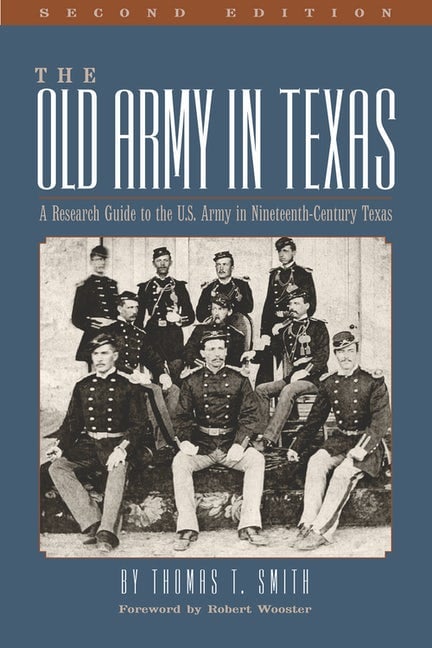
J. J. Bowden, The Exodus of Federal Forces from Texas, 1861 (Austin: Eakin Press, 1986). William C. Davis, ed., The Confederate General (6 vols., National Historical Society, 1991–1992). Dictionary of American Biography. Francis B. Heitman, Historical Register and Dictionary of the United States Army (2 vols., Washington: GPO, 1903; rpt., Urbana: University of Illinois Press, 1965), Robert Underwood Johnson and Clarence Clough Buel, Battles and Leaders of the Civil War (4 vols., New York: Yoseloff, 1956). Thomas T. Smith, The Old Army in Texas: A Research Guide to the U.S. Army in Nineteenth-Century Texas (Austin: Texas State Historical Association, 2000). Ezra J. Warner, Generals in Gray (Baton Rouge: Louisiana State University Press, 1959).
Time Periods:
Places:
The following, adapted from the Chicago Manual of Style, 15th edition, is the preferred citation for this entry.
Thomas W. Cutrer and David Paul Smith, Revised by William V. Scott, “Twiggs, David Emanuel,” Handbook of Texas Online, accessed March 09, 2026, https://www.tshaonline.org/handbook/entries/twiggs-david-emanuel.
Published by the Texas State Historical Association.
TID:
FTW03
All copyrighted materials included within the Handbook of Texas Online are in accordance with Title 17 U.S.C. Section 107 related to Copyright and “Fair Use” for Non-Profit educational institutions, which permits the Texas State Historical Association (TSHA), to utilize copyrighted materials to further scholarship, education, and inform the public. The TSHA makes every effort to conform to the principles of fair use and to comply with copyright law.
For more information go to: http://www.law.cornell.edu/uscode/17/107.shtml
If you wish to use copyrighted material from this site for purposes of your own that go beyond fair use, you must obtain permission from the copyright owner.
- 1952
- April 27, 2023
This entry belongs to the following special projects: