The Legacy of María Ygnacia Gutiérrez de Lara Uribe: Pioneer Ranch Owner (1783–ca. 1831)
By: Ashley Garcia and Russell Stites
Published: March 5, 2024
Updated: April 17, 2024
María Ygnacia (Ignacia) Gutiérrez de Lara Uribe, pioneer, ranch owner, and mother, was born to Juan José Gutiérrez de Lara and María Manuela Villarreal in Revilla, Nuevo Santander. Following the Mexican War of Independence, the Spanish province of Nuevo Santander became the Mexican state of Tamaulipas, and in 1827 the city of Revilla was renamed Guerrero in honor of Vicente Guerrero. Ygnacia Gutiérrez de Lara was baptized on August 25, 1783. She married José Dionisio Uribe, who was a cousin of José Bernardo Maximiliano Gutiérrez de Lara, Mexican revolutionary and the first governor of Tamaulipas, and grandnephew of Tomás Sánchez de la Barrera y Garza, founder of Laredo, Texas. They subsequently had six children.
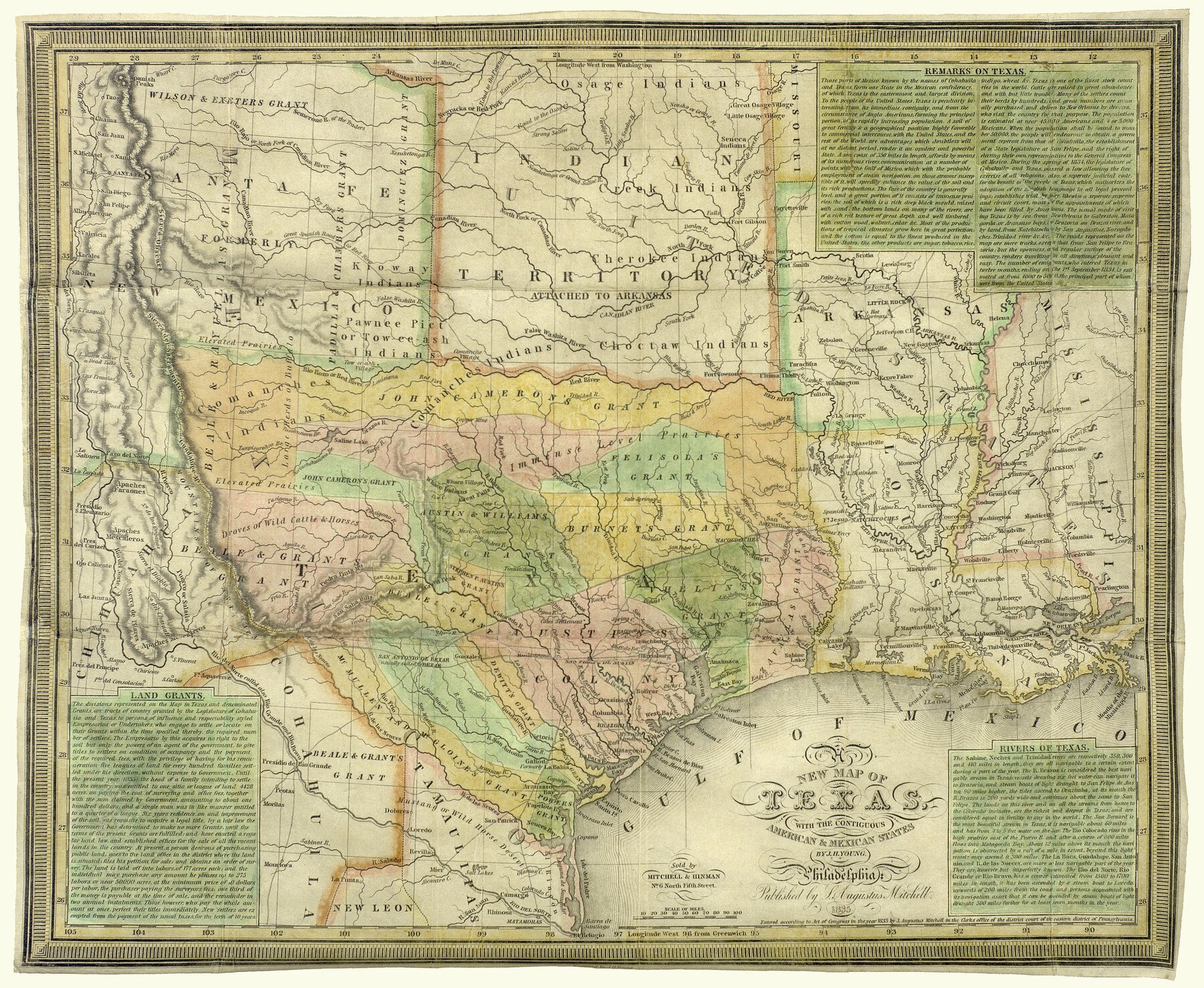
Ygnacia Uribe’s husband owned property on the north side of the Rio Grande, and she inherited the land following his death. In 1822 she crossed the Rio Grande to move to her new property around five miles northwest of present-day Zapata, Texas. The crossing occurred only a few years after American Indian raids forced the abandonment of Nuestra Señora de los Dolores Hacienda further upriver. Amazingly, Uribe relocated across the Rio Grande alone except for two of her young children, Blas María and Juan Martín. She endured environmental hardships and the constant threat of robbery or violence. The story of her courageous crossing was well-remembered by descendants and by residents of Zapata County. Uribe established and successfully managed her own ranch, which she named El Uribeño.
By 1830 Jesús Treviño, a wealthy Revilla merchant, had established Rancho San Ygnacio about ten miles upriver from El Uribeño. The settlement grew into the city of San Ygnacio, Texas. In 1832 Uribe’s oldest son, Blas María, married Treviño’s eldest daughter, Juliana. By then Ygnacia Uribe had died. Following Treviño’s death in 1842, Blas María Uribe took over the San Ygnacio ranch and became a successful businessman and leader of San Ygnacio. He expanded the ranching operations and established a freight business. He enlarged Treviño’s fortified ranching compound, which was located on the Old San Antonio Road and was named a National Historic Landmark in 1998. By the time of his death in 1895, Blas María Uribe had obtained more than half of the San Ygnacio subdivision of the Vásquez Borrego land grant (see VÁZQUEZ BORREGO, JOSÉ), amounting to roughly 100,000 acres across Webb and Zapata counties.
Juan Martín Uribe took over El Uribeño, which was managed by the Uribe family until it was submerged along with area communities and homes by the International Falcon Reservoir in 1953.
Bibliography:
Milo Kearney, ed., Studies in Brownsville History (Brownsville: Pan American University at Brownsville, 1986). José Antonio López, The Last Knight: Don Bernardo Gutierrez de Lara, a Texas hero (Bloomington, Indiana: Xlibris Corp, 2008). José Antonio López, Preserving Early Texas History: Essays of an Eighth-Generation South Texan (Bloomington, Indiana: Xlibris, 2015). Virgil N. Lott and Mercurio Martínez, The Kingdom of Zapata, 2nd ed. (Austin: Eakin Press, 1983). Terri Myers and Marlene Elizabeth Heck, “Treviño-Uribe Rancho,” National Register of Historic Places Registration Form, United States Department of the Interior, National Park Service, 1998. W. F. Strong, "Falcon Lake, now at devastatingly low capacity, has a storied history," Texas Standard, July 27, 2022. Joel C. Uribe, San Ygnacio, Texas: Su Legado Histórico (n.p., ca. 2001).
Categories:
Time Periods:
Places:
The following, adapted from the Chicago Manual of Style, 15th edition, is the preferred citation for this entry.
Ashley Garcia and Russell Stites, “Uribe, María Ygnacia Gutiérrez de Lara,” Handbook of Texas Online, accessed March 09, 2026, https://www.tshaonline.org/handbook/entries/uribe-maria-ygnacia-gutierrez-de-lara.
Published by the Texas State Historical Association.
TID:
FURIB
- March 5, 2024
- April 17, 2024
This entry belongs to the following special projects: